Your line palletizes bags while material properties change from hour to hour. Our systems maintain consistent speeds through moisture, density and flow variations.
Automation that processes up to 10,000 bags per shift
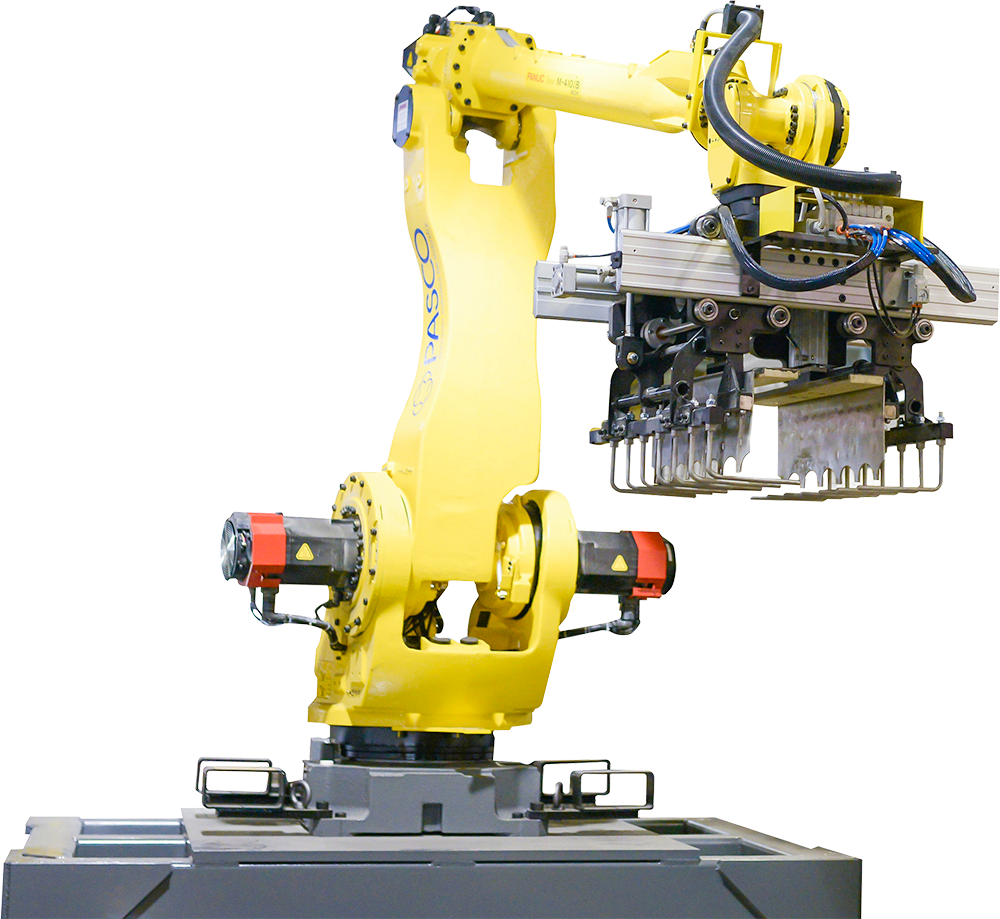
Bag palletizing requires equipment that adapts to constantly changing conditions. Pellets, powder, cubes and granules each present distinct challenges from flow properties to moisture and bulk density variations. Our systems handle these environmental shifts while maintaining throughput, backed by end-of-arm tools engineered for 8 million cycles.
Our robotic palletizing systems handle multiple bag types from valve bags and open mouth to form fill seals and gusseted bags. Built-in bag cleaning systems remove excess product residue before stacking, while integrated flattening technology removes trapped air to create stable, compact loads.
If your line runs varying product sizes simultaneously, automatically adjustable tooling can handle variable sizing without manual changes, with bundle tool attachments that switch over in under 60 seconds. This flexibility can deliver up to 12,000 bags per shift. For higher volumes, our hybrid layer-forming systems process full layers at 120 bags per minute.
Every critical component moves from raw material to finished system under one roof. Single-source manufacturing delivers reliability you can’t get from assembled components.
Capabilities
Robotic bag palletizer handles 5, 7, and 10-lb bags at speeds up to 64 per minute
Handles 50-lb bags at up to 27 bags per minute
Layer-forming systems process up to 120 bags per minute
bag, pallet, robot, productivity, robotic bag handling equipment, fanuc, packaging, machine, manufacturing, automation, warehouse, tool, forklift, efficiency, valve, material handling, cobot, powder, software, plastic, system integration, robotic palletizing, robotic palletizer, bag palletizing, palletizing robot, high speed, metal, ergonomics, risk, glass, bucket, logistics, distribution center, stainless steel, dust, vacuum, sand, recycling, liquid, crane, customer, steel, plant, adhesive, mouth, dairy, safety, refrigerator, cell, paper, mineral, return on investment, food industry, design, space, conveyor system, conveyor belt, dust collector, intermediate bulk container, baggage handling system, baggage, hoist, compactor, screw conveyor, transport, equipment, bulk material handling, baggage handler, waste, rotary valve, hydraulics, pump, animal feed, silo, cement, grain, solid, carbon steel, hopper, filler, electricity, checked baggage, floor, salt, vacuum cleaner, control valve, bulk bag handling, bulk bag unloader, bag dump stations, designed, maintenance, bulk, handling equipment, bulk bag discharging, bulk bags, material handling solutions, bulk bag, handling systems, bag fillers, systems, tophandle, cubic foot, industrial robot, sensor, conveyors, empty pallet, conveyor, request a quote, weight, fertilizer, robotic arm, welding, gravity, newsletter, information, mailing list, operation, palletizing equipment, perfect pallets, palletizing, solutions, palletizers, palletizer, pdf
Frequently Asked Questions
How often should bag handling equipment be inspected?
Bag handling equipment should be inspected regularly to ensure optimal performance and prevent operational issues. The frequency of inspection typically depends on the equipment's usage, environmental conditions, and manufacturer recommendations, usually ranging from daily checks to monthly or quarterly inspections.
What types of bags can be handled by robots?
PASCO® Systems can handle a variety of bag types, including valve and open mouth bags, through their advanced automated bag handling and palletizing solutions designed to adapt to changing material properties in industrial settings.
What types of bags are commonly used for palletizing?
The types of bags commonly used for palletizing include valve and open mouth bags, which are designed to address the challenges posed by changing material properties in industrial settings.
What is the average cost of a bag palletizing machine?
The average cost of a bag palletizing machine can vary widely depending on the specific requirements and features of the system, but typically ranges from $50,000 to $500,000 for a fully automated solution.
How does robotic bag handling equipment improve efficiency?
Robotic bag handling equipment improves efficiency by automating the process, increasing speed, accuracy, and reliability in handling various types of bags, while adapting to changing material properties in industrial settings.
What is robotic bag handling equipment used for in logistics?
Robotic bag handling equipment is used in logistics to efficiently process and palletize various types of bags, including valve and open-mouth bags, to improve operational efficiency and adapt to changing material properties in industrial settings.
What is the purpose of bag palletizing in a warehouse?
The purpose of bag palletizing in a warehouse is to efficiently stack and organize various types of bags, such as valve and open mouth bags, to optimize storage space and facilitate handling and transportation.
What machines are used for automated bag handling systems?
Automated bag handling systems utilize specialized machinery such as bag unloaders, bag conveyors, bag palletizers, and robotic bag stackers to efficiently process and handle various types of bags, including valve and open mouth bags.
How does bag palletizing reduce product damage?
Bag palletizing reduces product damage by gently stacking and securing bags on pallets, minimizing the risk of items shifting or falling during transport and storage. The automated process ensures consistent and stable palletization.
How do I choose the right bag palletizing equipment?
Choosing the right bag palletizing equipment involves considering factors like the type of bags, material properties, throughput requirements, and flexibility to adapt to changing conditions, ensuring efficient and reliable automated handling.
What is the average cost of robotic bag handling equipment?
The average cost of robotic bag handling equipment can vary depending on the complexity of the system, the scale of operations, and the specific features required. Typically, the cost ranges from $50,000 to $500,000 for a complete automated bag handling and palletizing solution.
Can robotic bag handling equipment reduce labor costs?
Robotic bag handling equipment can reduce labor costs by automating repetitive tasks, increasing efficiency, and allowing businesses to reallocate resources to more strategic operations.
Can bag handling robots replace human labor completely?
While bag handling robots can significantly improve efficiency, they are not a complete replacement for human labor in industrial settings. The expertise and adaptability of human workers remain essential for complex tasks and exceptional situations.
Can bag palletizing be used for food products?
Bag palletizing can be used for food products, as PASCO® Systems' automated solutions are designed to handle various bag types, including those used for food packaging, while maintaining the integrity and cleanliness required for food-grade applications.
How does bag palletizing improve supply chain efficiency?
Automated bag palletizing can improve supply chain efficiency by enabling faster and more consistent loading, reducing labor costs, and minimizing product damage, leading to smoother logistics and higher productivity.
Can bag palletizing be done manually or automatically?
Bag palletizing can be done both manually and automatically. Automated bag palletizing solutions, such as those offered by PASCO® Systems, can efficiently handle thousands of bags while adapting to varying material conditions.
How accurate are robotic bag handling systems?
PASCO® robotic bag handling systems are highly accurate, designed to precisely process thousands of bags with consistent performance, even as material properties change across industrial settings.
What are the key components of a bag handling system?
The key components of a bag handling system typically include bag conveyors, bag opening and closing mechanisms, bag palletizers, and control systems that coordinate the efficient movement and processing of various bag types.
What maintenance is required for bag handling equipment?
Proper maintenance for bag handling equipment typically includes regular cleaning, inspection, and lubrication of moving parts to ensure optimal performance and extended lifespan of the system.
How do robotic systems handle different bag sizes?
Robotic systems are designed to handle a variety of bag sizes by utilizing adjustable gripping mechanisms, vision systems, and advanced control algorithms that adapt to the specific dimensions and properties of each bag.
What safety features are in bag handling systems?
The safety features in PASCO® bag handling systems include advanced sensors, emergency stop controls, and protective guarding to ensure safe operation and prevent workplace accidents.
How can automation enhance bag palletizing processes?
Automation can enhance bag palletizing processes by improving the efficiency, speed, and reliability of handling various types of bags, including valve and open mouth bags, while adapting to changing material properties.
What industries benefit most from bag handling solutions?
The industries that benefit most from bag handling solutions are those that deal with large volumes of bagged products, such as agriculture, food processing, chemical manufacturing, and construction materials.
How do bag handling systems adapt to material changes?
PASCO® bag handling systems adapt to material changes by incorporating flexible technology that can process a variety of bag types, including valve and open mouth bags, while adjusting to fluctuations in material properties to ensure efficient and reliable operation.
What is the lifespan of robotic bag handlers?
The lifespan of robotic bag handlers can vary depending on factors like usage, maintenance, and technological advancements, but they are designed for long-term, reliable operation in industrial settings.
How do you troubleshoot bag handling equipment issues?
Troubleshooting bag handling equipment issues involves systematically identifying and resolving problems to ensure efficient operation, which may include inspecting components, adjusting settings, and implementing preventive maintenance measures.
What training is needed for operating bag handling systems?
The training needed for operating bag handling systems typically includes instruction on system operation, maintenance, and troubleshooting to ensure efficient and safe handling of various types of bags in industrial settings.
How do bag handling systems improve workflow efficiency?
Bag handling systems improve workflow efficiency by automating the process of transporting and palletizing various types of bags, including valve and open mouth bags, while adapting to changing material properties in industrial settings.
What innovations are emerging in bag handling technology?
Emerging innovations in bag handling technology include advanced automated systems that can efficiently process thousands of bags while adapting to changing material properties, offering flexibility, speed, and reliability to improve operational efficiency.
How do you assess the performance of bag handling systems?
The performance of bag handling systems is assessed based on factors such as throughput, reliability, adaptability to material changes, and overall operational efficiency.
robotic bag handling equipment, bag handling solutions, bag handling, automated bag handling equipment, material handling bags, bag palletizing conveyor systems, bag palletizing system, bag palletizing equipment, bag palletizing
Automated Bag Handling and Palletizing Systems
PASCO® automation systems handle a wide range of industrial bag types, including valve bags and open-mouth bags used for powdered, granular and pelletized products. Robotic palletizing systems and bag handling equipment are engineered to move bags reliably from filling through final palletizing.
Automating bag handling improves consistency while reducing the manual labor typically associated with palletizing heavy bagged materials.
Robotic Bag Palletizing for High-Throughput Operations
PASCO robotic palletizers are designed to handle high volumes of bagged product while maintaining stable pallet loads. Systems can palletize a wide range of bag sizes and weights while maintaining consistent placement and pallet patterns.
Integrated bag conditioning technologies such as bag flattening and alignment help create stable pallet loads that move reliably through storage and shipping operations.
Flexible Automation for Multiple Bag Types
Bag packaging operations often involve changing product types, bag materials and bag sizes. PASCO bag palletizing systems are engineered with adaptable end-of-arm tooling and controls that allow the system to handle different bag formats.
This flexibility allows facilities to automate bag palletizing without requiring extensive mechanical adjustments between product runs.
Integrated Bag Packaging and Palletizing Systems
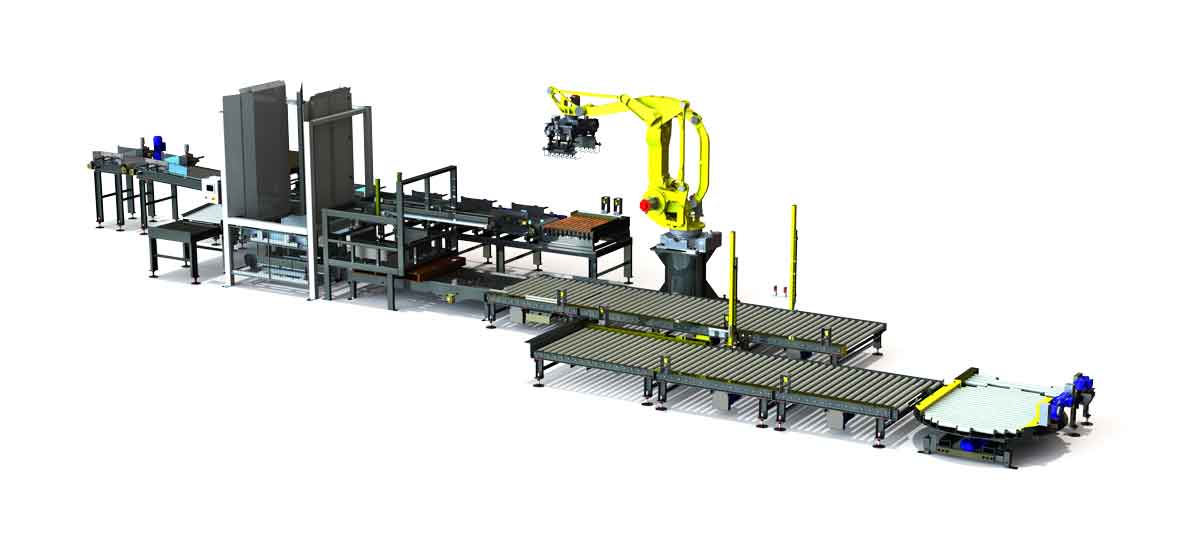
PASCO engineers bag handling automation to integrate with upstream filling equipment and downstream material handling systems. Bag conveying, inspection, palletizing and load stabilization can all be coordinated within a single automated packaging line.
This integrated approach helps manufacturers maintain steady throughput while improving the reliability of bag packaging and palletizing operations.