Frequently Asked Questions
Can palletizing be integrated with existing systems?
Automated palletizing systems can be seamlessly integrated with existing manufacturing operations, allowing for a smooth transition to increased efficiency and productivity without disrupting current workflows.
What is the role of palletizing in inventory management?
Palletizing plays a crucial role in inventory management by enabling efficient storage, transportation, and handling of goods. It helps optimize space utilization, minimize damage, and streamline the overall logistics process.
What safety features are included in automated palletizing systems?
Automated palletizing systems incorporate various safety features such as light curtains, emergency stops, and sensor-based monitoring to protect workers and ensure safe operation in harsh manufacturing environments.
Can a robotic palletizer operate in a cold storage environment?
Yes, robotic palletizers can operate in cold storage environments. These specialized systems are designed to withstand harsh conditions, including extreme temperatures, to ensure reliable and efficient palletizing performance in various manufacturing settings.
What is the average cost of a robotic palletizer system?
The average cost of a robotic palletizer system can vary widely depending on factors such as the size, complexity, and customization requirements of the system.
Can palletizing be used for fragile or sensitive products?
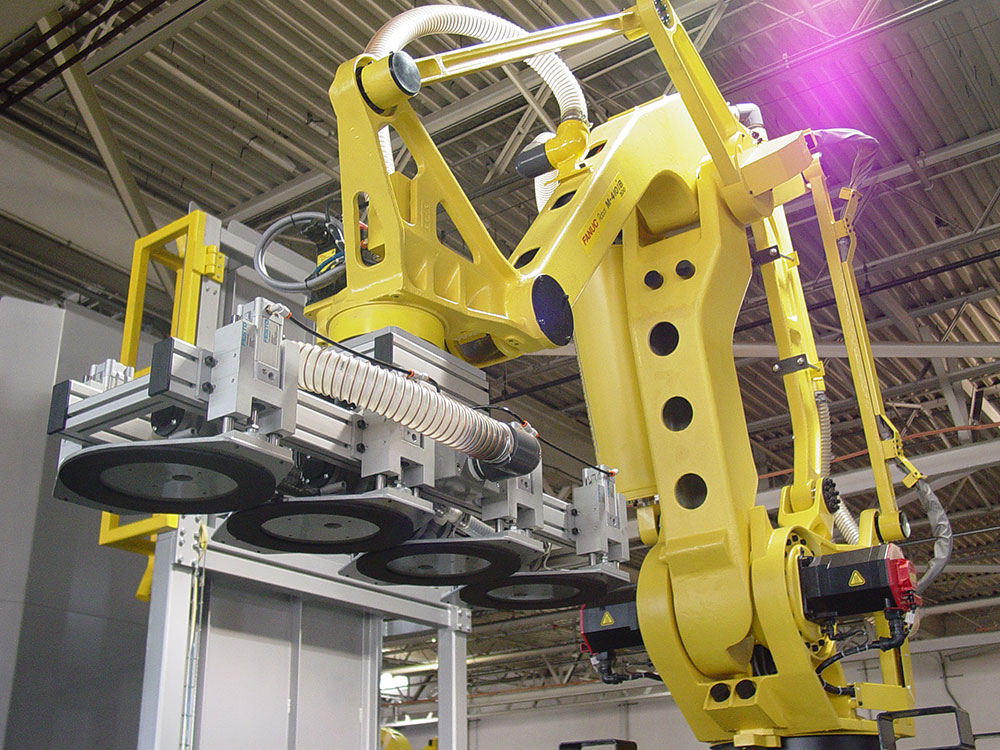
Yes, palletizing can be used for fragile or sensitive products with the right custom end-of-arm tooling and handling techniques. Automated palletizing systems can be designed to gently lift and stack delicate items without damage.
How does automated palletizing reduce labor costs?
Automated palletizing reduces labor costs by minimizing the need for manual handling, increasing efficiency, and improving productivity with 24/7 operation without breaks or fatigue, leading to significant cost savings for manufacturing operations.
What are the common types of palletizing machinery used?
The common types of palletizing machinery used include robotic palletizers, high-speed conventional palletizers, layer palletizers, and hybrid palletizing systems, each offering unique capabilities to meet varying production needs.
How accurate is a robotic palletizer in stacking products?
Robotic palletizers can achieve exceptional accuracy in stacking products, with precision down to the millimeter. Their advanced sensors and control systems ensure consistent placement and optimal pallet utilization.
Can a robotic palletizer be customized for specific industries?
Yes, robotic palletizers can be customized for specific industries. PASCO® offers tailored automated palletizing solutions to meet the unique requirements of different manufacturing environments and production processes.
What is the primary function of a robotic palletizer?
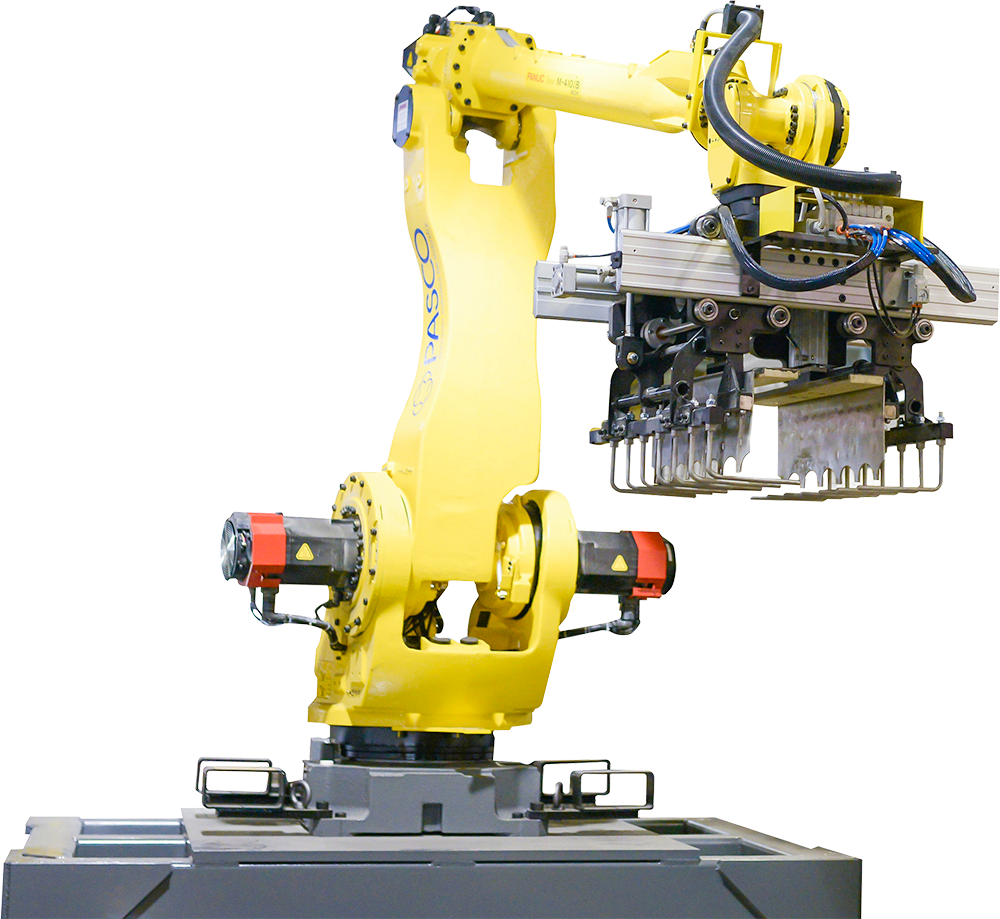
The primary function of a robotic palletizer is to automate the process of stacking and organizing products onto pallets for efficient storage and transportation, helping to improve productivity and reduce labor costs in manufacturing environments.
What are the advantages of layer palletizing over traditional methods?
The advantages of layer palletizing over traditional methods include increased efficiency, improved product stability, and reduced labor requirements, making it a more cost-effective and ergonomic solution for industrial palletizing needs.
What are the benefits of using a robotic palletizer?
The benefits of using a robotic palletizer include increased efficiency, improved safety, and reduced labor costs in harsh manufacturing environments. Robotic palletizers can work 24/7 with consistent performance, customizable end-of-arm tools, and seamless integration into existing operations.
How does a robotic palletizer improve plant efficiency?
Robotic palletizers improve plant efficiency by automating the palletizing process, reducing labor costs, increasing throughput, and ensuring consistent, high-quality palletization even in harsh manufacturing environments.
Can automated palletizing increase production efficiency?
Automated palletizing can increase production efficiency by reducing manual labor, improving consistency, and increasing throughput. Automated systems can operate 24/7 with consistent performance, minimizing errors and boosting overall productivity.
Can automated palletizing be customized for specific industries?
Automated palletizing solutions can be customized for specific industries, with PASCO® offering tailored end-of-arm tooling and integration into existing operations to meet the unique requirements of manufacturing environments.
What is the purpose of palletizing in logistics?
The purpose of palletizing in logistics is to efficiently stack, transport, and store products by organizing them onto standardized platforms called pallets. This enables safe, secure, and optimized handling and distribution of goods throughout the supply chain.
How does a robotic palletizer integrate with existing systems?
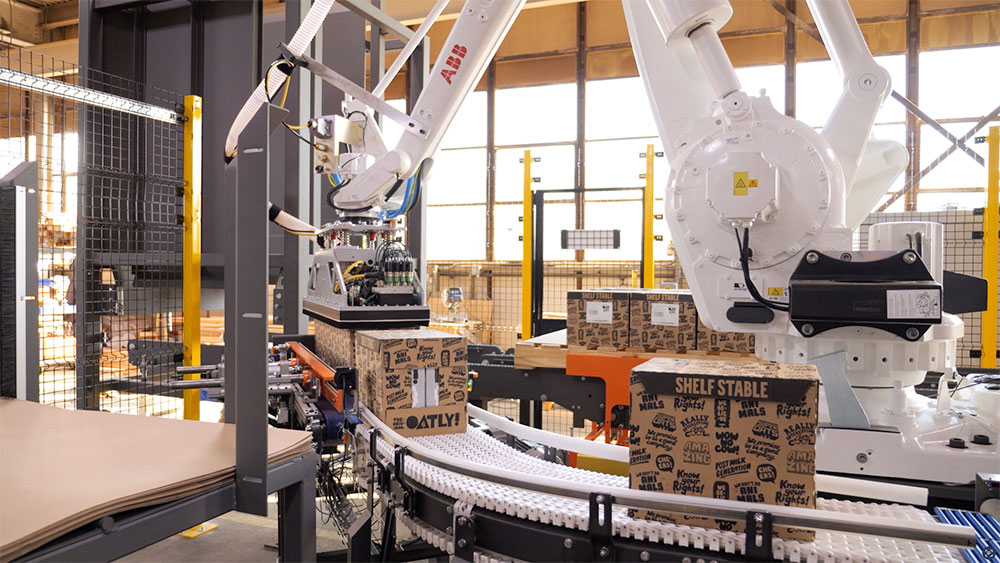
Robotic palletizers can seamlessly integrate with existing manufacturing systems by interfacing with conveyors, lift systems, and control networks to automate the palletizing process and streamline production workflows.
How does automated palletizing enhance supply chain management?
Automated palletizing enhances supply chain management by improving efficiency, reducing labor costs, and increasing productivity, enabling businesses to better manage their inventory, optimize workflows, and respond quickly to market demands.
What are the benefits of using robots in palletizing?
The benefits of using robots in palletizing include improved efficiency, increased productivity, enhanced safety, and consistent performance in harsh manufacturing environments, enabling companies to streamline their operations and meet production demands.
What is the accuracy rate of automated palletizing systems?
Automated palletizing systems are designed to achieve extremely high accuracy rates, often exceeding 99.9%, ensuring precise product placement and minimizing errors throughout the packaging and shipping process.
What is the typical speed of a robotic palletizer?
The typical speed of a robotic palletizer can range from 20 to 60 cycles per minute, depending on factors such as the size and weight of the loads, the complexity of the palletizing pattern, and the overall system configuration.
Can a robotic palletizer handle fragile or delicate products?
Robotic palletizers can handle fragile or delicate products by utilizing specialized end-of-arm tooling and precise control to gently pick, stack, and secure products without causing damage.
How do robotic palletizing systems work?
Robotic palletizing systems work by using advanced robotics and automation to efficiently stack and arrange products onto pallets, enabling hands-free, high-speed palletizing in demanding manufacturing environments.
What is the purpose of automated palletizing in manufacturing?
The purpose of automated palletizing in manufacturing is to improve efficiency and productivity by reducing labor requirements, increasing throughput, and maintaining consistent product handling in harsh industrial environments.
What types of products can be automated for palletizing?
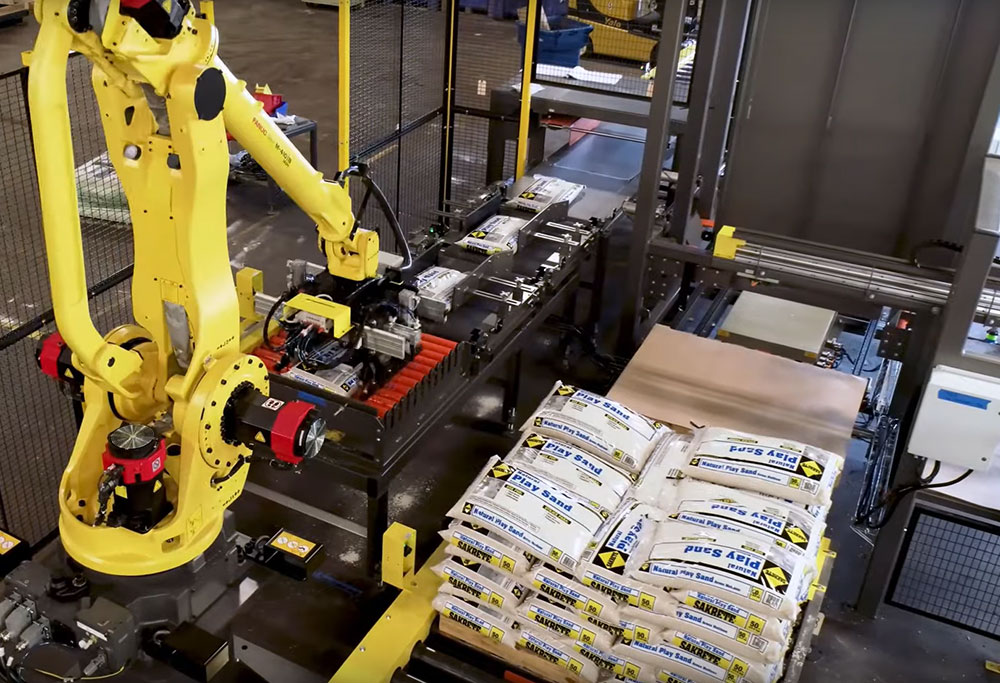
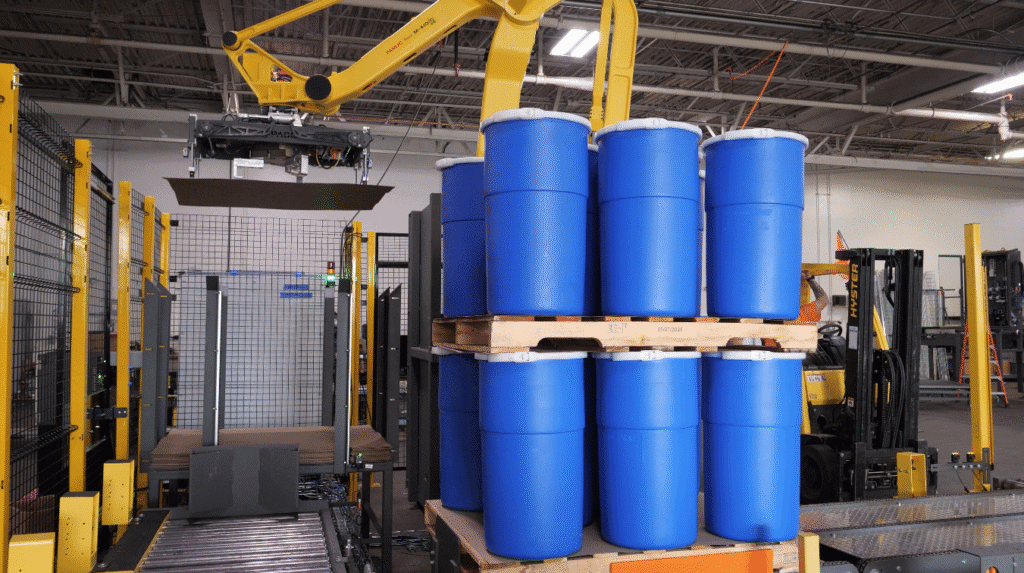
A wide range of products can be automated for palletizing, including bags, boxes, pails, cartons, cases, containers, drums, kegs and other packaged goods suitable for stacking onto pallets.
How does palletizing impact shipping and transportation costs?
Palletizing optimizes shipping and transportation costs by enabling efficient use of space, load stability, and easier handling during transport, resulting in reduced material handling expenses and overall logistics optimization.
How does palletizing affect product packaging design?
Palletizing affects product packaging design by requiring packaging that can withstand the stacking and transportation process, ensuring product integrity and efficient pallet loading. Packaging must be sturdy enough to support the weight of the entire pallet.
How does automated palletizing improve productivity?
Automated palletizing improves productivity by increasing throughput, reducing labor costs, and minimizing errors and downtime associated with manual palletizing. It enables continuous, precise, and efficient stacking of products onto pallets to optimize warehouse and shipping operations.
What industries benefit most from robotic palletizers?
Robotic palletizers are most beneficial for industries that require high-volume, repetitive product handling where they can improve efficiency, safety, and productivity.