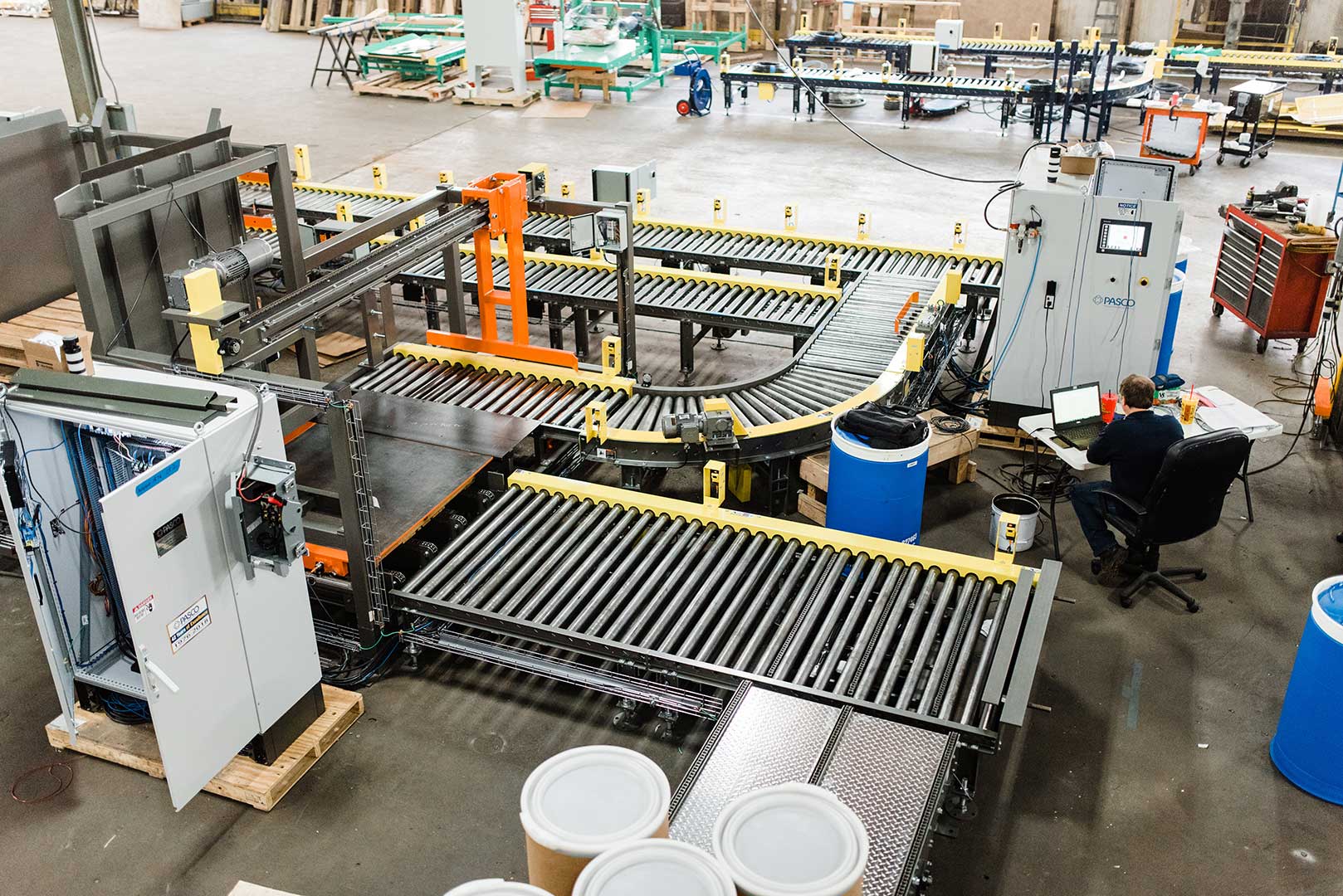
bdlr conveyors, chain conveyor, pasco, modular conveyors, belt driven conveyor, live roller conveyor systems, industrial conveyor systems, conveyor system, industrial conveyor system, packaging conveyors, packaging conveyor systems, product conveyors
Industrial Conveyor Systems for Harsh Environments
PASCO® conveyor systems are engineered to operate in demanding industrial environments where reliability is critical to production. These systems are designed to maintain consistent product movement in high-temperature operations, heavy-duty transfers and other challenging material handling conditions.
Robust construction and application-specific engineering allow PASCO conveyors to support continuous production while minimizing common mechanical failure points.
Belt and Roller Conveyor Systems for Material Handling
PASCO designs a range of conveyor systems to support automated packaging and palletizing operations. Belt-driven live roller (BDLR) conveyors use Poly-V belts designed to resist stretching and maintain consistent product flow, while chain-driven live roller (CDLR) conveyors use heavy-duty chain systems built for demanding loads.
Slider-bed belt conveyors provide smooth product transport, while roller-bed conveyors handle heavier loads across industrial packaging lines.
Conveyor Systems for Packaging and Palletizing Lines
Conveyors play a central role in moving product through automated packaging and palletizing operations. PASCO conveyor systems are engineered to move, merge, transfer and accumulate products as they travel through the end of the line.
These systems integrate with palletizers, depalletizers, case packers and other packaging equipment to maintain steady product flow throughout the facility.
Custom Conveyor Systems for Industrial Applications
PASCO specializes in custom conveyor system design to match the specific requirements of each facility. Conveyor layouts are engineered around product size, load capacity, throughput requirements and environmental conditions.
This custom engineering approach ensures conveyor systems integrate with existing automation equipment while supporting reliable long-term material handling performance.
Frequently Asked Questions About Industrial Conveyor Systems
What is the role of accumulation conveyors in end-of-line packaging and palletizing?
Accumulation conveyors hold product between machines that run at different rhythms. Upstream packaging equipment runs continuously, while a palletizer pauses for pallet changes. An accumulation section lets product queue during those pauses so the upstream line keeps running. PASCO builds accumulation conveyors as part of the line, including belt-driven live roller (BDLR) systems that use Poly-V belts instead of rubber bands for consistent grip without stretching.
How do you calculate required accumulation buffer capacity on an automated packaging line?
Start with your line rate multiplied by the longest downstream stop you need to ride through. For example, a line producing 20 cases per minute that needs to cover a 3-minute pallet change needs room for at least 60 cases, before adding margin. PASCO's applications engineers size accumulation during layout, based on your product dimensions, throughput, and the equipment on either side of the conveyor.
What types of conveyor systems are required for heavy-duty pallet handling vs. carton handling?
Pallet handling calls for chain-driven live roller (CDLR) conveyors. PASCO builds them with heavy-duty chains engineered to your load requirements and OSHA standards. Cartons and cases typically move on belt-driven live roller conveyors or on slider-bed, roller-bed, or modular belt conveyors, sized to your product dimensions and throughput. Products too heavy or hot for a belt move on industrial chain conveyors.
How do sanitary and washdown conveyor designs differ from standard industrial conveyors?
Sanitary designs generally use corrosion-resistant materials and open construction that drains and cleans easily, while standard conveyors are built for dry plant conditions. PASCO matches materials to the operating environment, from freezer operations to high-temperature applications, and builds stainless steel structures for constant-moisture environments such as ice production. Mesh conveyors are available where drainage is needed, and every component is built to your specific regulatory requirements.
What are the key maintenance checkpoints to prevent conveyor line downtime?
The usual checkpoints are drive belt or chain condition and tension, bearings, and the motors and controls that keep each section at speed. Design choices reduce how often those checks turn into repairs. PASCO's BDLR conveyors use Poly-V belts that hold grip without stretching, where rubber bands wear and slip over time. PASCO also offers preventative maintenance and keeps engineering records on every build, so replacement parts are available years after installation, with 1,200+ parts ready to ship same-day.