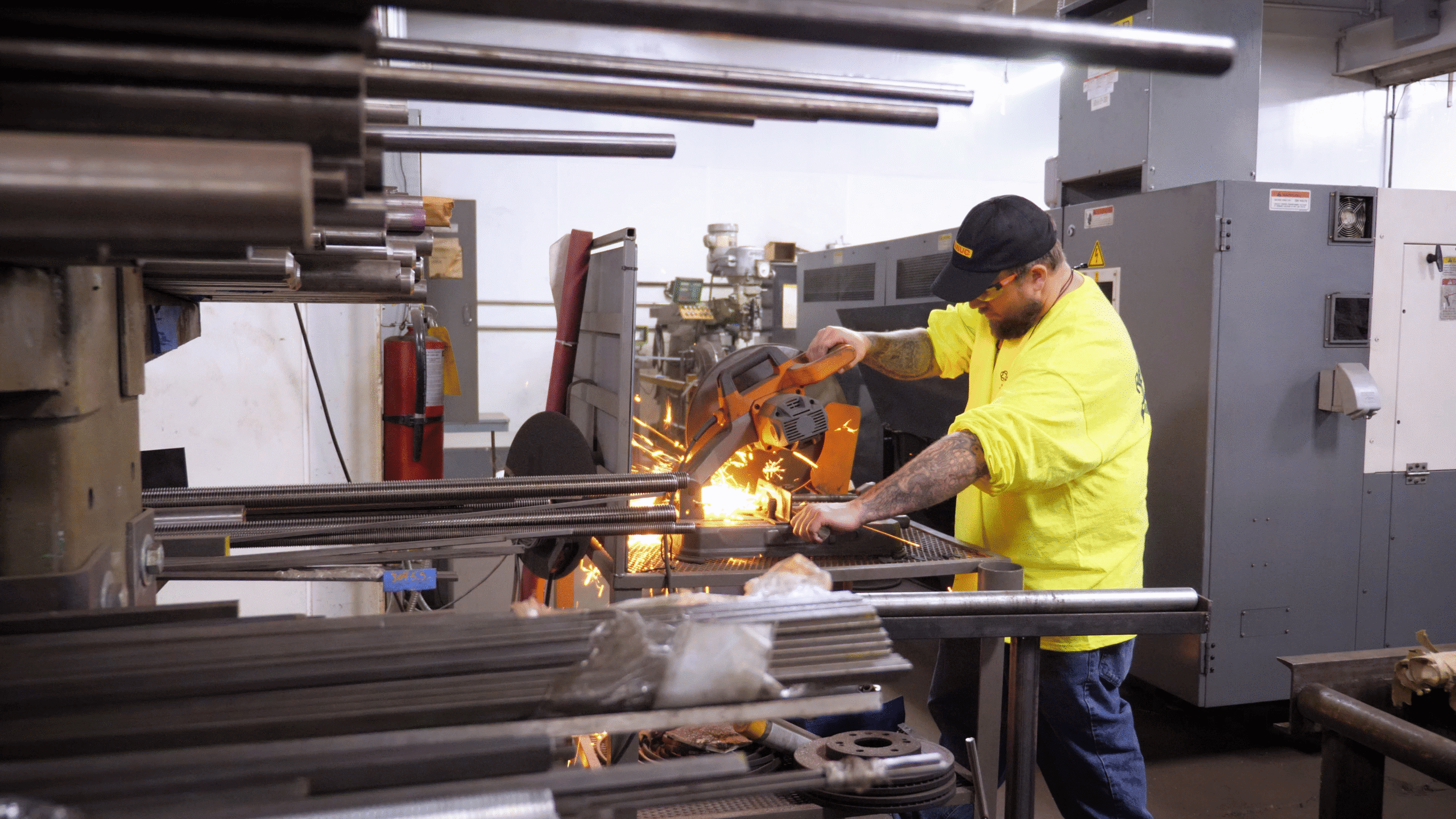
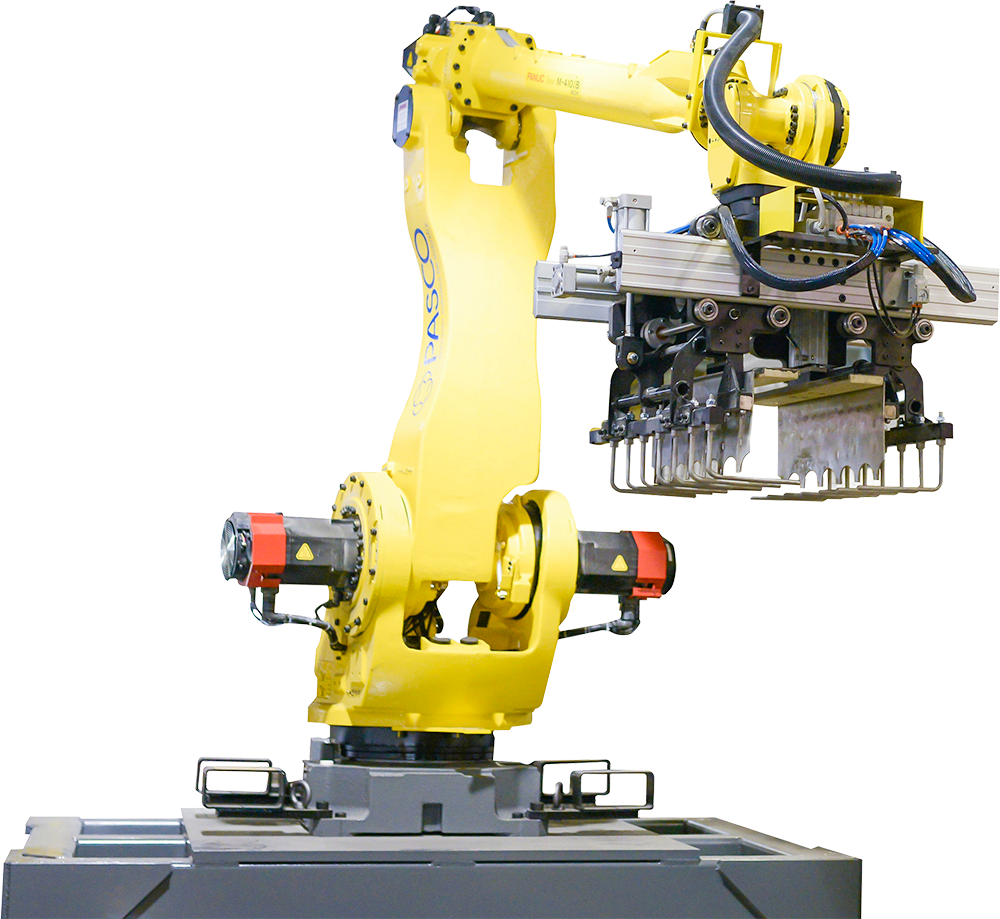
The tools have improved over the years, but the process is still hands-on. Steel still gets cut, parts still get welded and machined, systems still get assembled and tested by the same people who will support them after install. When the work stays in-house, there is less guessing and fewer surprises when the system goes into production.
Why In-House Manufacturing Helps in Automation
When design and build happen under the same roof, problems tend to show up earlier, when they are easier and cheaper to fix. The people laying out the system are working alongside the people who have to fabricate and assemble it. That feedback loop keeps projects grounded in reality.
It also helps with consistency. Relying heavily on outside sources for critical items introduces more variability in lead times, substitutions and fit. Building the majority of key components in-house keeps the system closer to what was intended and reduces surprises during installation.
Over time, that discipline shows up in startup performance and in how smoothly systems run once they are in production.
Built for Real Customer-Specific Conditions
If you’re reading this, you know that industrial automation systems don’t run in ideal conditions. They run in high-heat, dust, vibration, and on around the clock production schedules. End-of-line systems in particular have to keep pace with everything upstream, often without much room for error.
Building critical components in-house helps us design around how a customer’s facility actually operates. We can build for access, service points, guarding, and the wear areas we know will take abuse. That work is easier to do when the people designing the system are working next to the people fabricating and assembling it.
Support Is Stronger When You Built It
Manufacturing in-house also changes what support looks like after installation. When the same team designed and built the system, troubleshooting tends to move faster because there is less guesswork about how the equipment was put together.
That carries into parts support. PASCO keeps more than 1,200 common parts stocked so customers are not waiting on long lead times or international shipments when something needs attention. When a line is down, delays add up quickly. Keeping those parts close to home is one of the more practical ways to reduce downtime risk.
The Bottom Line
Fifty years in automation teaches you what lasts and what doesn’t. You see where equipment holds up and where it starts to cause headaches once it’s been on the floor for a while. We’ve built most of the critical components in-house from the start. That’s a big reason our systems stay serviceable years after install. It keeps decisions close to the work, and it keeps accountability in one place when customers need support.
The approach hasn’t changed much in five decades: build it right, stand behind it and keep the line running.