Frequently Asked Questions
How can end-of-arm tools enhance automation processes?
End-of-arm tools enhance automation processes by providing precise, efficient handling of products, allowing for seamless integration into robotic systems. This leads to increased productivity, reduced cycle times, and improved versatility in various manufacturing applications.
What are the different types of end effectors available?
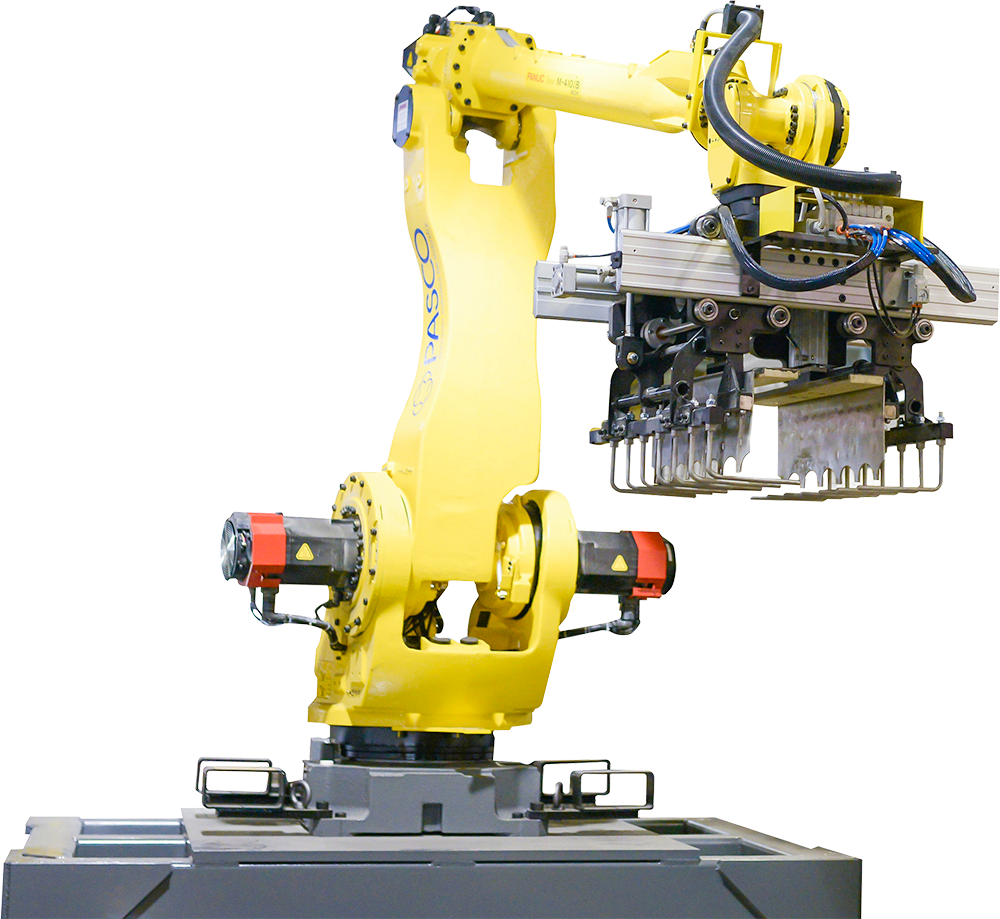
The different types of end effectors available include mechanical grippers, vacuum tools, and multifunctional tools, each designed to meet specific product handling needs in automation processes.
How does PASCO Systems customize end-of-arm tooling for specific needs?
PASCO Systems customizes end-of-arm tooling by collaborating closely with clients to understand their unique product handling requirements, allowing for the design and engineering of tailored solutions that enhance automation efficiency and effectiveness.
What applications can benefit from using mechanical gripping tools?
Applications that can benefit from using mechanical gripping tools include assembly lines, packaging processes, and material handling in manufacturing, where precise and reliable gripping of various objects is essential for efficiency and safety.
What are the advantages of using vacuum tools in automation?
The advantages of using vacuum tools in automation include their ability to securely handle a wide variety of products, ensuring gentle yet efficient gripping. They enhance productivity by allowing for quick and precise movements while minimizing damage to delicate items.
How do multifunctional tools improve efficiency in product handling?
Multifunctional tools enhance efficiency in product handling by integrating multiple functions into a single tool, reducing the need for multiple devices. This streamlining minimizes setup time, lowers operational costs, and increases productivity in automation processes.
What industries benefit from end-of-arm tools?
The industries that benefit from end-of-arm tools include manufacturing, automotive, electronics, food processing, and pharmaceuticals, as these tools enhance automation efficiency and precision in handling diverse products.
How do end effectors improve production efficiency?
End effectors enhance production efficiency by enabling precise handling, reducing cycle times, and minimizing errors in automation processes. Their tailored designs ensure optimal performance for specific tasks, ultimately streamlining operations and increasing throughput.
What features distinguish PASCOs end-of-arm tooling?
The features that distinguish PASCO's end-of-arm tooling include custom-engineered designs, a variety of gripping mechanisms, and the capability to handle diverse products efficiently, ensuring optimal performance in automation processes.
How are mechanical gripping tools designed for precision?
Mechanical gripping tools are designed for precision through careful engineering that focuses on exact tolerances, advanced materials, and customizable features, ensuring reliable and accurate handling of various products in automation processes.
What factors influence the choice of end effectors?
The factors influencing the choice of end effectors include the specific application requirements, the type of materials being handled, the weight and size of the items, and the desired speed and precision of the automation process.
How do vacuum tools handle delicate products?
Vacuum tools handle delicate products by using adjustable suction levels and soft, compliant materials that conform to the item's surface, ensuring a secure grip without causing damage during the handling process.
What customization options does PASCO offer for tooling?
PASCO offers a variety of customization options for tooling, including tailored designs for mechanical gripping tools, vacuum tools, and multifunctional tools, ensuring that each solution meets specific product handling and automation needs.
How can end-of-arm tools reduce operational costs?
End-of-arm tools can significantly reduce operational costs by enhancing efficiency, minimizing downtime, and decreasing labor expenses through automation. Their precision and adaptability streamline production processes, leading to lower waste and improved overall productivity.
What role do end effectors play in robotics?
The role of end effectors in robotics is to serve as the interface between the robot and the environment, enabling the manipulation, grasping, and handling of objects essential for various automation tasks.
How do multifunctional tools adapt to various tasks?
Multifunctional tools adapt to various tasks by incorporating interchangeable components and adjustable features, allowing them to handle different materials and sizes efficiently, making them versatile solutions for diverse automation needs.
What are the safety considerations for using end-of-arm tools?
Safety considerations for using end-of-arm tools include ensuring proper training for operators, conducting regular maintenance checks, and implementing safety guards to prevent accidents. Additionally, it's crucial to assess load capacities and ensure tools are compatible with the automation system.
How can automation solutions enhance workflow efficiency?
Automation solutions enhance workflow efficiency by streamlining repetitive tasks, reducing human error, and optimizing resource allocation, allowing businesses to focus on higher-value activities and improve overall productivity.
What materials are commonly used in end effectors?
The materials commonly used in end effectors include aluminum, stainless steel, plastic, and rubber. These materials are selected for their durability, weight, and ability to handle various products in automation processes.
How do end-of-arm tools support lean manufacturing?
End-of-arm tools support lean manufacturing by enhancing efficiency and precision in product handling, reducing waste, and streamlining processes. Their custom-engineered design ensures optimal performance tailored to specific automation needs, promoting continuous improvement and productivity.
What innovations are emerging in end-of-arm tooling?
Innovations emerging in end-of-arm tooling include advanced materials for lighter, more durable designs, smart sensors for enhanced precision and adaptability, and integration with AI for improved automation and efficiency in various handling applications.
How can end effectors be integrated into existing systems?
Integrating end effectors into existing systems involves assessing compatibility with current automation setups, ensuring proper interface connections, and customizing the tooling to meet specific handling requirements, thus enhancing operational efficiency and productivity.
What maintenance practices are recommended for end-of-arm tools?
Recommended maintenance practices for end-of-arm tools include regular inspection for wear and tear, cleaning to remove debris, lubricating moving parts, and ensuring proper alignment and calibration to maintain optimal performance and longevity.
How do end-of-arm tools improve product quality?
End-of-arm tools improve product quality by ensuring precise handling, reducing human error, and enhancing consistency in assembly processes. This leads to better product integrity and reliability, ultimately resulting in higher customer satisfaction.
What training is required for using end effectors?
The training required for using end effectors includes understanding their operation, safety protocols, and integration with robotic systems. Users should also familiarize themselves with specific handling techniques relevant to their applications.
How can PASCOs tools be tailored for unique applications?
PASCO's tools can be tailored for unique applications through custom engineering, allowing for modifications in design, materials, and functionality to meet specific product handling needs in various automation processes.
What are the limitations of current end-of-arm technologies?
The limitations of current end-of-arm technologies include restricted payload capacities, limited adaptability to diverse shapes and sizes, and challenges in handling delicate or irregularly shaped objects, which can hinder their effectiveness in certain automation applications.
How do end-of-arm tools contribute to sustainability?
End-of-arm tools contribute to sustainability by enhancing energy efficiency, reducing material waste, and optimizing production processes. Their precision and adaptability minimize resource consumption, leading to a more environmentally friendly approach in automation.
What testing methods ensure end effector reliability?
The testing methods that ensure end effector reliability include rigorous performance evaluations, stress testing, and lifecycle assessments. These methods help identify potential failures and validate the durability and effectiveness of the tooling in various automation applications.
How can automation solutions be scaled for growth?
Automation solutions can be scaled for growth by integrating modular components and flexible systems that adapt to changing production demands, allowing businesses to efficiently expand operations while maintaining optimal performance and cost-effectiveness.