When “simple” automation isn’t so simple
Many customers looking to automate palletizing start by requesting a simple, standalone cell. Most integrators respond with a standard system: a 10×10 layout, outsourced conveyors and off-the-shelf tooling. Something quick to quote and easy to drop in.
But in complex or high-throughput environments, that simplicity can be misleading. Without a full understanding of upstream and downstream processes, even the best standalone cell can fall short. That’s why we take the time to evaluate the entire line before proposing a solution.
The hidden cost of end-of-line bottlenecks
A lot of end-of-line automation gets sold as one-off fixes.
Need palletizing? Here’s a cell.
Need case packing? Different system.
Quality control? Call someone else.
But when every part of your line comes from a different playbook, the pieces don’t always work together. You end up with “automation islands” – systems that function fine on their own but cause friction when stitched into a larger process.
Nowhere is this more obvious than at the end of the line. Manual packaging and palletizing eat up floor space, slow down output and turn into the chokepoint for everything upstream. We’ve seen operations where production runs smoothly until the product hits the floor for manual handling.
And at that point, it doesn’t matter how advanced your equipment is. If your most valuable space is underused, you’re losing time and money every day.
The impact adds up in delayed orders, strained teams and missed capacity. That’s why we look at the full system instead of just one machine. Because real efficiency comes from properly connecting and integrating equipment instead of isolating single cells.
Why we map the full line first: Diagnosing the root cause
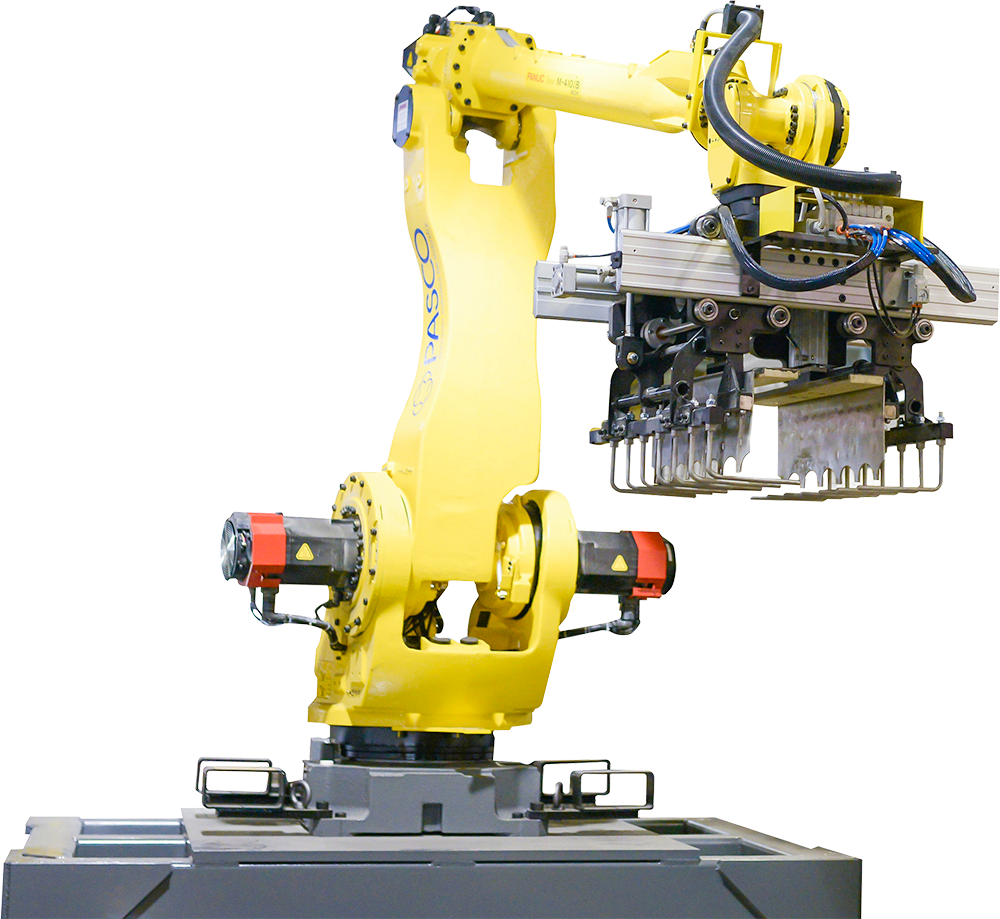
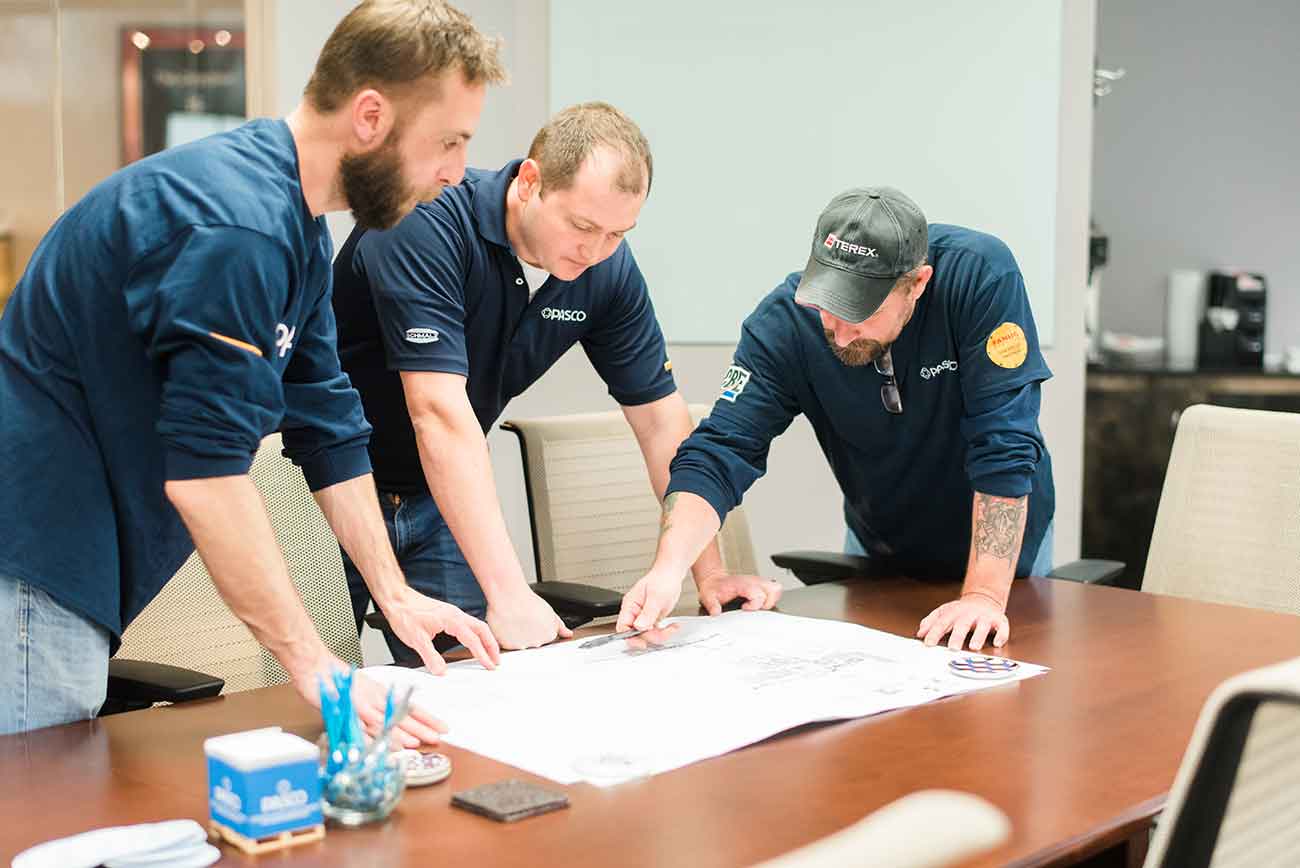
Before we quote a robotic palletizer or any end-of-line equipment, we take the time to understand the full production environment. Our applications engineering team works directly with the people closest to the process whether that’s a plant manager, engineer, or production lead to map out how materials actually move through the line.
We visit the facility. We review existing systems. And we look for integration points and hidden inefficiencies that could undermine automation if left unaddressed.
This approach often uncovers deeper challenges that would be missed in a standard quote process. Some of the most common issues we see include:
- Inconsistent packaging conditioning. Dimensional variations that seem minor can jam standard end-of-arm tools, causing downtime, product damage and lost efficiency.
- Manual quality checks. Random inspection delays can starve the palletizer of product, leading to poor robot utilization and unpredictable throughput.
- Legacy conveyors. Older conveyor systems often can’t keep pace with the speed and consistency a modern automated palletizer needs, creating hidden bottlenecks.
- Floor space constraints. Tight layouts frequently require custom cell designs to avoid interfering with other operations, something off-the-shelf solutions don’t account for.
Without looking at the full line, it’s easy to miss the real reasons things slow down or under perform.
Automated palletizing only works if it fits properly into everything around it. That means thinking about the process first. How materials move, where delays happen and how systems connect, not just what the robot does.
Custom automation vs. standard cells: Engineering for your reality
We build each palletizing system to fit the application because no two operations are exactly alike. A 50-pound cement bag isn’t the same as a salt bag or a feed bag. Dust, moisture, bag shape, stacking pattern… It all affects how the system needs to function.
Some of the things we focus on:
- Engineered for consistent throughput – If your line runs at 22 bags per minute, we design for more. Not to inflate specs, but to make sure your system can handle real-world variability without falling behind. Better to have margin than bottlenecks.
- Upstream quality checks – We place vision systems, weight checks and dimensional tools where they make sense, not after the fact. That way, issues get caught before they slow things down.
- Integrated controls – When one machine needs something, the others respond. Pallets get delivered automatically. Rejected bags don’t jam the line. It runs like a system, not a group of parts.
- Room to grow – Things will change. We design systems that can change with you, whether that’s a higher rate, new product, or layout shift.
It’s not about over-engineering. It’s about building something that fits, works and doesn’t get in your way when your needs evolve.
The real cost of shortcuts: A case study in ROI
Say you buy a basic palletizing cell with a robot, end-of-arm tool and a couple conveyors. It shows up prebuilt, drops in fast and looks like a win.
But then the upstream flow isn’t consistent. The robot starves. A bad bag makes it past manual inspection and ruins the stack. Your team steps in constantly to keep things moving. Meanwhile, your upstream equipment is running at half its potential because the end of the line can’t keep up. Now you’re spending time and money retrofitting something that was never designed for your process.
That’s the risk with one-size-fits-all systems. They don’t account for the details that actually determine throughput. When palletizing is built to fit the reality of your line, productivity per square foot increases drastically. Instead of processing 12 bags per minute in 100 square feet, you might double that output in the same footprint, just by removing the choke point.
That’s where the ROI is. Not just in how the palletizer performs, but in how it frees up the rest of your operation to do more with what you already have.
Engineering for how modern production actually runs
Things don’t always go as planned on a line. Products shift. Timing’s off. Someone’s out sick. Equipment gets bumped. The system still has to work.
That’s what we build for. We keep interfaces simple enough for operators to manage without overthinking. We build in fault handling so one bad sensor read doesn’t stop everything. Hardware is designed to hold up when the floor gets busy.
We don’t treat automation like it exists in a vacuum. If you’re palletizing, we look at what happens before and after. What feeds it. What depends on it. What slows it down.
Most of the time, it’s not about adding more equipment. It’s about understanding why the pieces you already have aren’t working together the way they should.
That’s what we’re solving for.
FREQUENTLY ASKED QUESTIONS
What is an “automation island”?
An automation island refers to a system or piece of equipment that functions well independently but doesn’t integrate smoothly with other parts of the production line, leading to inefficiencies and friction.
Why is end-of-line automation often a bottleneck?
End-of-line processes like manual packaging and palletizing become bottlenecks because they are often the last step before shipping. If these manual processes are slow or inefficient, they can limit the overall throughput of the entire production line, regardless of how efficient upstream processes are.
What are the benefits of mapping the full production line before automation?
Mapping the full line allows for a comprehensive understanding of how materials move, identifying potential bottlenecks, integration challenges, and hidden inefficiencies. This approach ensures that automation solutions are designed to work seamlessly within the existing environment, maximizing efficiency and preventing future problems.
How does custom automation differ from standard cells?
Custom automation is engineered to fit the specific needs and conditions of an application, considering factors like product type, throughput requirements, and facility layout. Standard cells, while quicker to implement, are often off-the-shelf solutions that may not address these unique variables, potentially leading to performance limitations.
What is the ROI of integrated end-of-line automation?
The ROI of integrated automation comes not just from the performance of the automated equipment itself, but from its ability to eliminate bottlenecks and improve the efficiency of the entire production line. This can lead to increased throughput, reduced waste, better space utilization and overall operational cost savings.
Request an assessment
Think you need additional square footage to meet your production demands? You might just be bottlenecked. Get in touch with our expert engineers who can assess how to get the most out of your operation.