Many automation companies design systems, buy most of the equipment from outside suppliers, then assemble and program it. That model can work, but it also means the people building the system are a step removed from the work that happens on the floor.
After 50 years in business, PASCO is still a manufacturer. We build the majority of the critical components in our systems in-house, and that has been part of the business model since day one. It gives us more control over what goes into the system, how it goes together, and how it can be supported after it ships.
What “Manufacturer” Means at PASCO
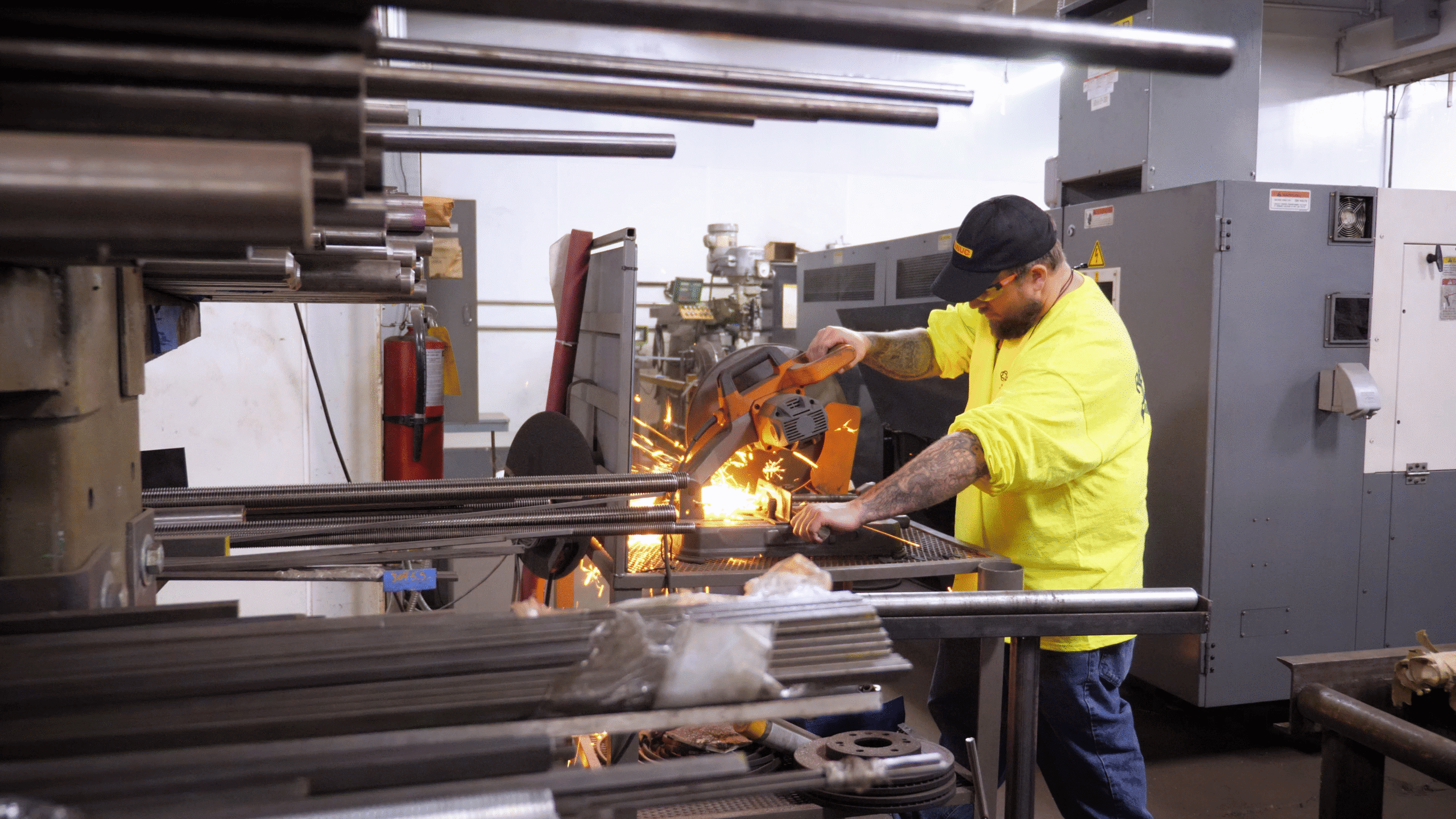
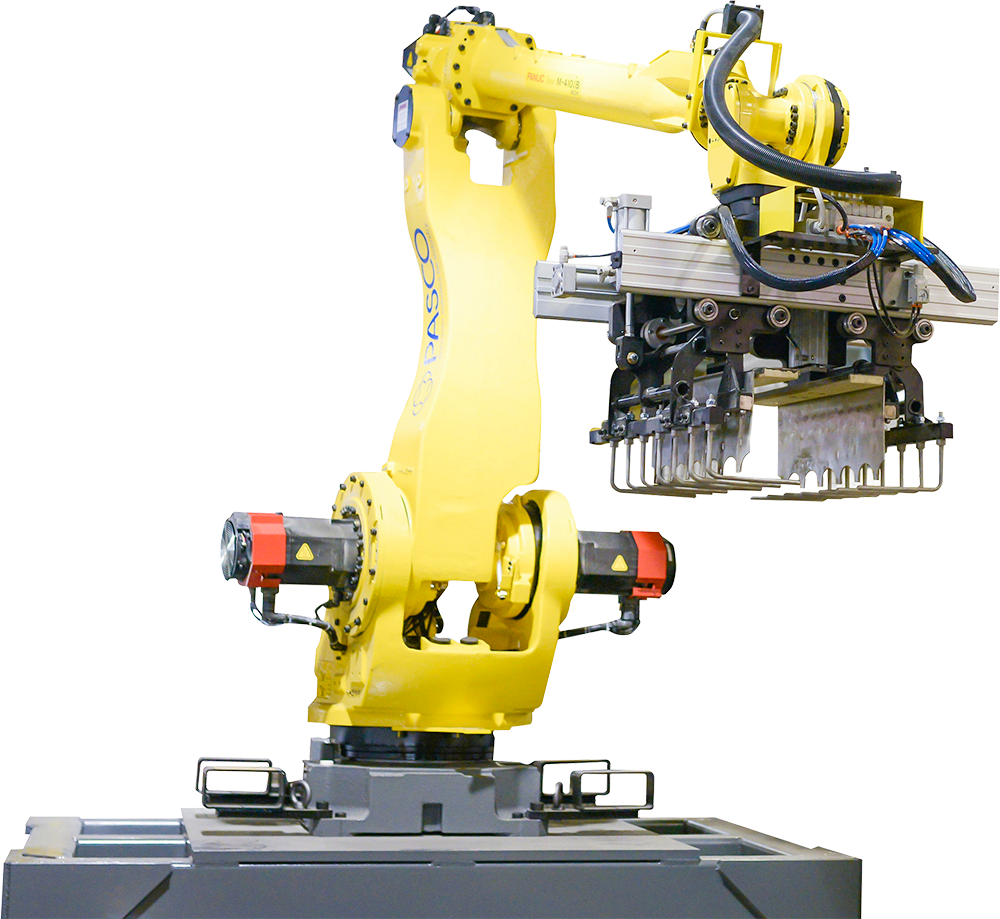
When we say manufacturer, we mean we take a project from raw steel to a fully running system, built and tested in-house. We fabricate and machine the structures and critical components, weld assemblies, build panels, integrate robotics and other key equipment, then wire, program, and run the system before it ships. That work happens under one roof, which keeps the build tight and keeps decisions grounded in what will actually work on the floor.
The tools have improved over the years, but the process is still hands-on. Steel still gets cut, parts still get welded and machined, systems still get assembled and tested by the same people who will support them after install. When the work stays in-house, there is less guessing and fewer surprises when the system goes into production.
Why In-House Manufacturing Helps in Automation
When design and build happen under the same roof, problems tend to show up earlier, when they are easier and cheaper to fix. The people laying out the system are working alongside the people who have to fabricate and assemble it. That feedback loop keeps projects grounded in reality.
It also helps with consistency. Relying heavily on outside sources for critical items introduces more variability in lead times, substitutions and fit. Building the majority of key components in-house keeps the system closer to what was intended and reduces surprises during installation.
Over time, that discipline shows up in startup performance and in how smoothly systems run once they are in production.
Built for Real Customer-Specific Conditions
If you’re reading this, you know that industrial automation systems don’t run in ideal conditions. They run in high-heat, dust, vibration, and on around the clock production schedules. End-of-line systems in particular have to keep pace with everything upstream, often without much room for error.
Building critical components in-house helps us design around how a customer’s facility actually operates. We can build for access, service points, guarding, and the wear areas we know will take abuse. That work is easier to do when the people designing the system are working next to the people fabricating and assembling it.
Support Is Stronger When You Built It
Manufacturing in-house also changes what support looks like after installation. When the same team designed and built the system, troubleshooting tends to move faster because there is less guesswork about how the equipment was put together.
That carries into parts support. PASCO keeps more than 1,200 common parts stocked so customers are not waiting on long lead times or international shipments when something needs attention. When a line is down, delays add up quickly. Keeping those parts close to home is one of the more practical ways to reduce downtime risk.
The Bottom Line
Fifty years in automation teaches you what lasts and what doesn’t. You see where equipment holds up and where it starts to cause headaches once it’s been on the floor for a while. We’ve built most of the critical components in-house from the start. That’s a big reason our systems stay serviceable years after install. It keeps decisions close to the work, and it keeps accountability in one place when customers need support.
The approach hasn’t changed much in five decades: build it right, stand behind it and keep the line running.

What are the common applications of industrial automation?
The common applications of industrial automation include packaging, palletizing, material handling, quality control, and customizable robotic systems, which help manufacturers enhance efficiency, precision, and reliability in their production processes.
What are the benefits of automated palletizing systems?
Automated palletizing systems offer increased efficiency, consistency, and worker safety by automating the repetitive task of stacking products onto pallets. This helps improve productivity, reduce labor costs, and minimize the risk of injuries.
How does automated equipment enhance product quality?
Automated equipment enhances product quality by ensuring consistent and precise manufacturing processes, reducing human error, and maintaining high standards of production efficiency and reliability in industrial environments.
What is the initial investment for automated equipment?
The initial investment for automated equipment can vary depending on the complexity and scale of the system, but it typically requires a significant upfront capital expenditure to purchase and install the necessary hardware and software.
How does industrial automation improve worker safety?
Industrial automation can enhance worker safety by reducing manual handling, minimizing exposure to hazardous environments, and automating repetitive tasks, thereby mitigating the risk of workplace injuries.
What types of industries use automated equipment most?
Industries that rely heavily on automated equipment are typically those with high-volume, repetitive manufacturing processes, such as automotive, food and beverage, consumer goods, building products, landscape products and more These industries leverage automation to improve efficiency, consistency, and safety in their operations.
What is the primary goal of industrial automation in manufacturing?
The primary goal of industrial automation in manufacturing is to improve efficiency, productivity, and reliability by leveraging technologies such as robotics, control systems, and data analytics to streamline production processes.
What are the benefits of using automated equipment in manufacturing?
Using automated equipment in manufacturing can provide increased efficiency, precision, and consistency in production processes, leading to improved product quality, reduced labor costs, and increased productivity.
Can automated equipment be integrated with existing systems?
Automated equipment can be seamlessly integrated with existing systems, allowing for a smooth transition and optimized performance across manufacturing processes.
What is the role of robotics in industrial automation?
Robotics play a crucial role in industrial automation, enabling manufacturers to automate repetitive tasks, improve efficiency, and enhance productivity in various industrial processes, particularly in packaging and palletizing operations.
What types of products are commonly palletized?
A wide variety of products are commonly palletized, including boxes, crates, bags, and other packaged goods, as palletization helps streamline transportation and storage of these diverse industrial and consumer items.
How does industrial automation reduce production costs?
Industrial automation can reduce production costs by increasing efficiency, minimizing labor, and improving process consistency, leading to higher output and decreased operational expenses.
Can industrial automation replace human workers completely?
While industrial automation can significantly streamline and enhance production processes, it is unlikely to completely replace human workers entirely. Automation complements human skills, but certain tasks still require unique human capabilities.
Optimizing Your Packaging and Palletizing Operations
Streamline Your Packaging Processes
PASCO Systems offers end-of-line automation solutions that can handle a wide variety of packaging types, from bags and drums to cases and pails. By automating your packaging processes, you can improve efficiency, consistency, and reliability, ensuring your products are handled with precision.
Our customizable automation equipment is engineered to perform seamlessly in even the harshest industrial environments, delivering the performance you need to keep your operations running smoothly.
Maximize Productivity with Automated Palletizing
Automated palletizing systems from PASCO Systems can revolutionize your material handling operations. By automating the repetitive task of stacking products onto pallets, you can increase efficiency, reduce labor costs, and enhance worker safety.
Our palletizing solutions are designed to handle a diverse range of products, from boxes and crates to bags and bottles, ensuring a consistent and reliable palletizing process that optimizes your supply chain logistics.
The PASCO Advantage
At PASCO Systems, we pride ourselves on being a true OEM, manufacturing the critical components of your automation systems in-house. This means you work directly with the team that built your equipment, ensuring you receive the support and expertise you need, when you need it.
Our commitment to quality and customer service is unparalleled, and we strive to deliver tailored solutions that meet the unique needs of your business. Whether you're looking to enhance your packaging, palletizing, or broader automation efforts, PASCO Systems is the partner you can trust.