How robotic automation can reduce operational costs in manufacturing
By: Alyssa Bardol
In manufacturing, operational costs aren’t just numbers on a spreadsheet. They show up on the floor every shift. Labor shortages, overtime, product damage, downtime, and inconsistent throughput all chip away at margins, especially at the end of the line.
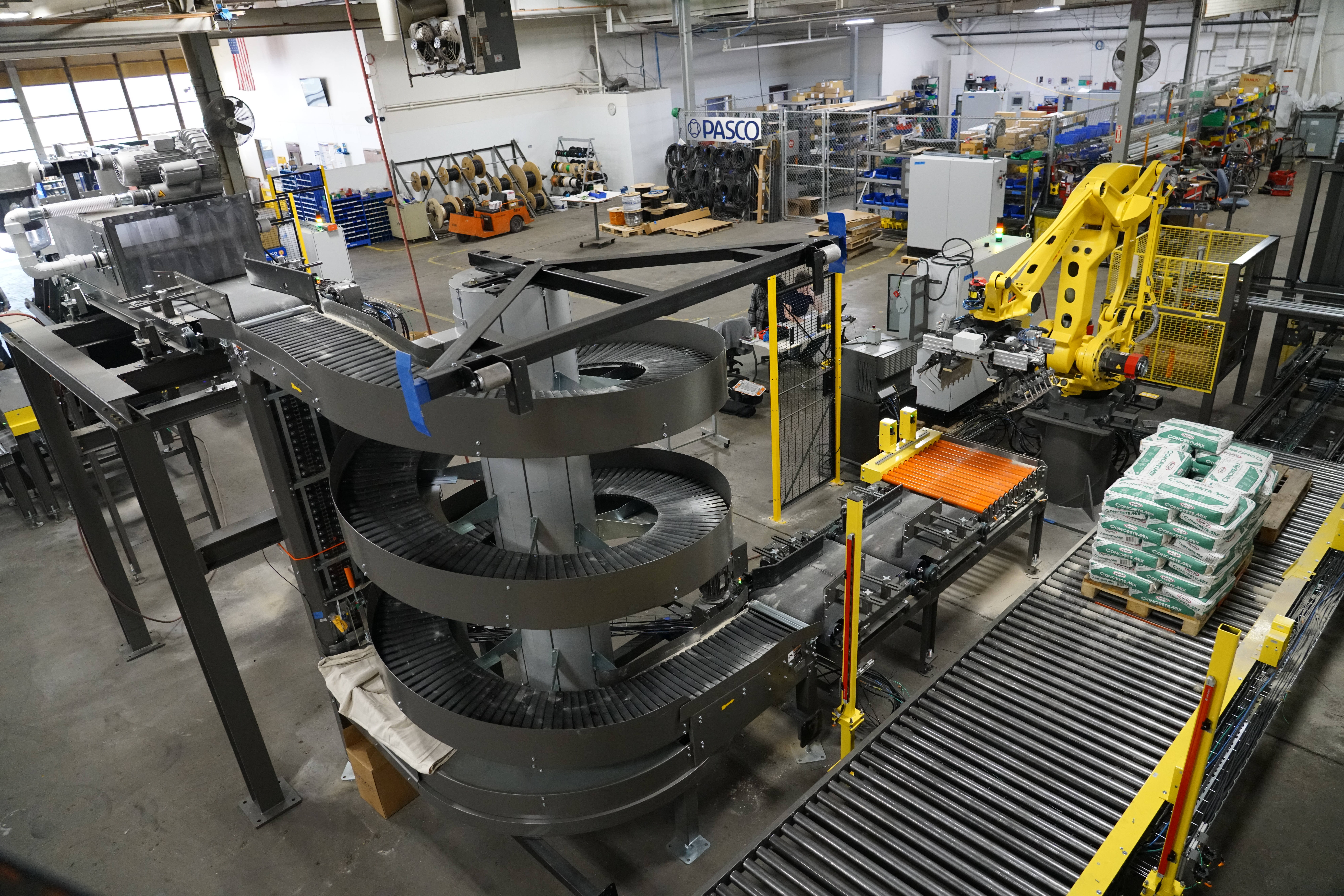
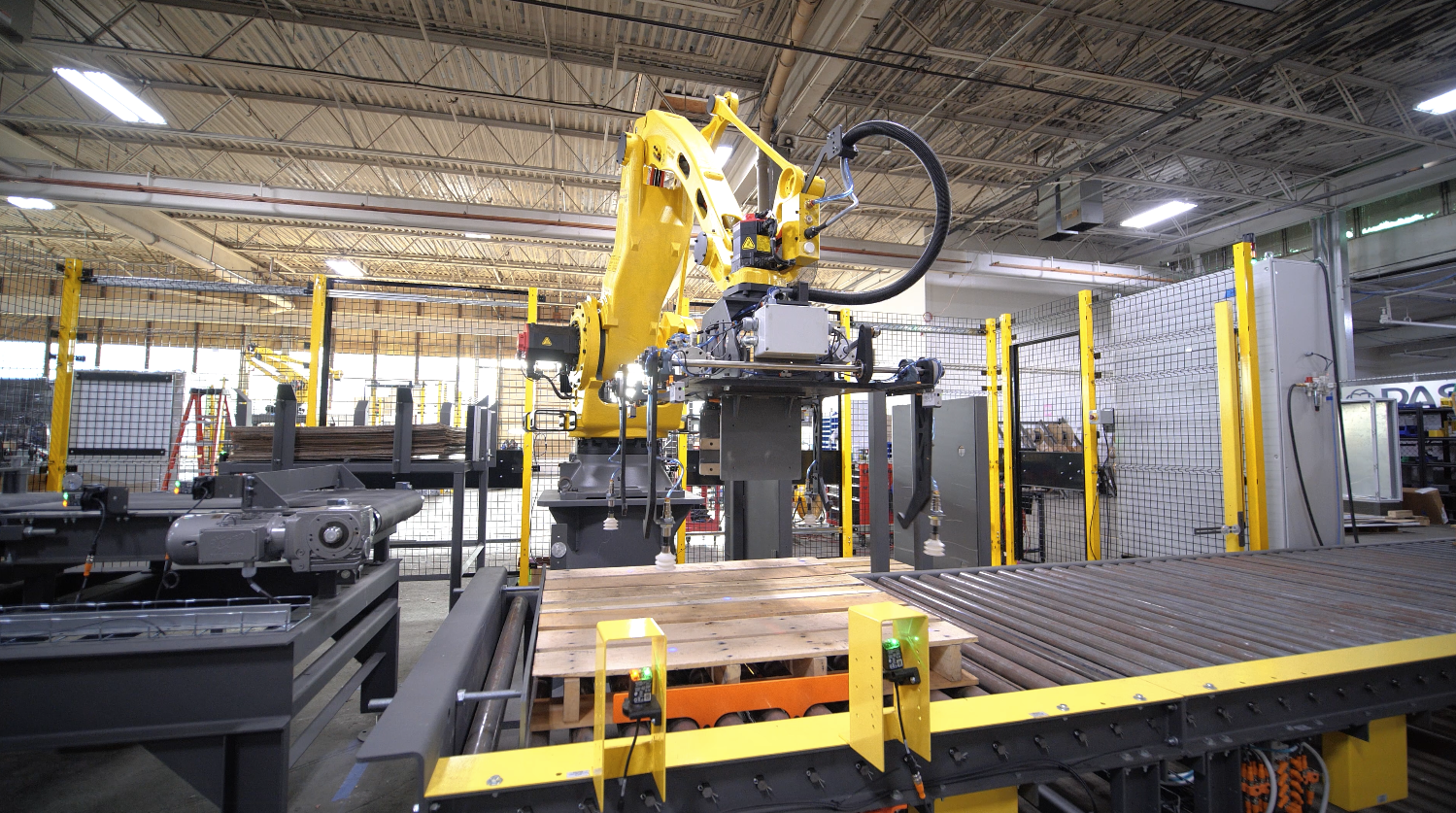
Robotic automation has become one of the most effective ways manufacturers address these challenges. When applied strategically, particularly in end-of-line operations, like palletizing, case handling and material flow into shipping, automation can reduce costs while improving consistency, safety, and output.
This article looks at how industrial robotic automation reduces operational costs in real production environments, where the last step of the line often determines how efficiently the entire operation runs.
Key operational costs in manufacturing and how robotics can address them
Operational costs in manufacturing encompass various expenses, including labor, materials, energy, and maintenance. Robotic automation solutions can effectively target these areas, leading to significant reductions in overall costs.
Which manufacturing expenses are most impacted by automation?
Labor costs: Manual end-of-line tasks are labor-intensive, difficult to staff, and often require overtime or multiple shifts. Automating palletizing or case handling reduces dependence on hard-to-fill roles and lowers long-term labor and overtime costs.
Material costs: Inconsistent stacking, dropped product, and damaged packaging all contribute to waste. Robotic systems repeat the same motion every cycle, reducing mis-stacks, crushed cases, and rework that slows shipping.
Downtime and maintenance costs: When end-of-line operations stop, upstream equipment often has nowhere to send product. Automated systems help reduce these stoppages by maintaining consistent flow and enabling more predictable maintenance schedules.
How does robotic automation target these cost areas effectively?
Robotic automation targets operational costs through practical, production-focused improvements:
Automation of repetitive tasks: Robots take over repetitive end-of-line work such as lifting, stacking, and positioning, reducing labor dependency and physical strain.
Precision in operations: Consistent motion improves placement accuracy and load stability, which helps reduce handling errors and downstream issues in shipping.
Reduction of waste: Better repeatability reduces damaged product, mis-stacks, and rework that slow throughput and increase material loss.
These improvements lead to smoother end-of-line flow and fewer hidden costs over time.
Industrial automation and its impact on labor costs and workforce efficiency
Industrial robots reduce labor costs by handling continuous, physically demanding tasks while allowing skilled workers to focus on oversight, maintenance, troubleshooting, and process improvement.
In end-of-line applications, this shift typically helps manufacturers reduce overtime pressure, improve safety, and keep output steady even when staffing is tight. The result is a more efficient use of labor and a more predictable operation overall.
Research further supports the significant impact of robotic process automation on manufacturing efficiency and cost reduction.
Robotic Process Automation for Manufacturing Efficiency & Cost Reduction
This paper addresses the persistent issue of workflow inefficiencies in the manufacturing sector, which significantly hinder overall productivity and operational effectiveness. The complexities inherent in traditional manufacturing processes often lead to bottlenecks, elevated costs, and increased error rates. In this study, we explore the application of Robotic Process Automation (RPA) as a transformative solution to ameliorate these inefficiencies. The results demonstrate substantial improvements in several critical areas: workflow efficiency increased by 30%, time savings amounted to an average reduction of 25% in processing tasks.
Robotic Process Automation for Improving Workflow Efficiency in Manufacturing, 2022
In what ways do robots automate repetitive manufacturing tasks?
Robots are particularly effective in automating tasks such as:
Palletizing and product handling: Robots consistently pick, orient, and place cases, bags, or products onto pallets according to a defined pattern. This reduces manual lifting, eliminates variation between operators, and prevents the mis-stacks and unstable loads that slow shipping and create rework.
End-of-line quality and verification checks: Automated systems can confirm pallet patterns, layer alignment, load height, and basic placement requirements before product leaves the cell. Catching these issues at the end of the line helps prevent downstream problems that are costly to fix once product is staged for shipping or already in transit.
By automating these repetitive end-of-line tasks, manufacturers reduce physical strain on workers while keeping experienced personnel focused on oversight, maintenance, and process improvement rather than manual handling.
How does 24/7 robotic operation lower labor expenses and overtime?
The ability of robots to run continuously without breaks leads to meaningful labor savings, especially in multi-shift environments. Key benefits include:
Reduced need for shifts: Fewer people are required to cover physically repetitive end-of-line tasks across multiple shifts.
Lower overtime costs: When robots carry the bulk of end-of-line workload, overtime is less likely to become the default solution for meeting demand.
Continuous operation also improves consistency, which helps stabilize throughput and production planning.
Robotic precision and its role in minimizing material waste and enhancing quality control
Robotic automation improves precision and repeatability, which is critical when finished product is being handled for the last time before shipping. In end-of-line environments, small inconsistencies can quickly turn into product damage, unstable pallets, and rework.
When stacking, positioning, and transfer steps are consistent cycle after cycle, manufacturers see fewer handling-related issues and better overall product presentation.
What role does automation play in reducing defects and rework?
Automation reduces defects by standardizing motion and reducing variability. In end-of-line applications, this often shows up as fewer mis-stacks, fewer crushed cases, and fewer pallets that have to be broken down and rebuilt.
Lower defect rates reduce rework costs and help prevent small issues from turning into downtime, especially when the line is running at speed and product backs up quickly.
How can robotics improve consistency and product standards?
Robots improve consistency by doing the same motion the same way every time, which supports tighter product and packaging standards.
Standardization of processes: Automated systems ensure consistent placement, pattern repeatability, and load stability.
Quality assurance measures: Continuous monitoring and consistent handling reduce variation that can lead to damage, rework, or rejected loads.
That consistency also helps protect customer experience by reducing shipping-related product issues.
How robotics boosts production efficiency and throughput in manufacturing
Robotic automation improves throughput by stabilizing the end of the line. When palletizing, case handling, or packaging can’t keep up, upstream equipment is forced to slow down or stop, which drags down overall efficiency.
Automating end-of-line steps helps reduce bottlenecks and supports higher sustained production rates without relying on manual labor to “catch up.”
What are the effects of automation on production cycle times?
Automation can shorten production cycle times by:
Streamlining processes: Robots perform repetitive tasks quickly and consistently, reducing delays caused by manual handling.
Reducing downtime: Stable end-of-line flow reduces stoppages and prevents product backup that forces upstream interruptions.
These improvements lead to higher throughput and more efficient use of resources.
How does increased throughput translate to operational cost savings?
Increased throughput directly correlates with cost savings in several ways:
Cost Savings from Increased Throughput: Higher production rates lead to lower per-unit costs.
Impact on Overall Operational Costs: As production increases, fixed costs are spread over a larger number of units, reducing the overall cost per unit.
This efficiency allows manufacturers to remain competitive in pricing while maintaining profitability.
How increased throughput translates to operational cost savings
Higher throughput reduces operating cost per unit by spreading fixed costs across more output. It also reduces indirect costs tied to inefficiency, such as overtime, manual rework, and downtime caused by end-of-line bottlenecks.
When the end of the line runs consistently, the rest of the line is more likely to run consistently, too.
How does predictive maintenance enabled by robotics reduce downtime and maintenance costs?
Predictive maintenance helps manufacturers shift from reactive repairs to planned maintenance. Many robotic systems provide operational data that can be used to monitor performance, identify wear patterns, and address issues before they become failures.
This is especially valuable at the end of the line, where equipment issues can stop shipping and quickly create upstream disruption.
How does reduced unscheduled downtime impact operational expenses?
Unscheduled downtime drives direct and indirect costs, including lost production, labor inefficiency, and missed shipping windows. Predictive maintenance reduces these events by allowing repairs to be scheduled during planned downtime instead of during production.
The savings often go beyond maintenance budgets. Reduced downtime improves throughput stability and makes labor planning more predictable.
Predictive Maintenance for Reduced Downtime & Material Waste
of this model resulted in a 66.67% reduction in unplanned downtime events. Sustainability is also supported, as predictive maintenance helps reduce material and energy consumption.
… a sustainable model for integrating robotic process automation and machine learning in failure prediction and operational efficiency in predictive maintenance, L Varela, 2025
Return on investment considerations for robotic automation in manufacturing
ROI for robotic automation typically comes from a combination of labor savings, reduced waste, higher throughput, and improved uptime. In end-of-line automation, ROI is often tied to how quickly a facility can reduce overtime pressure, stabilize staffing, and prevent bottlenecks that limit output.
How do you calculate ROI for robotic automation solutions?
Calculating ROI involves evaluating both costs and measurable savings:
Initial investment costs: Equipment, integration, installation, and commissioning.
Operational savings: Reduced labor and overtime, lower waste and rework, fewer downtime events, and more predictable maintenance.
Increased revenue: Higher sustained throughput or expanded capacity without adding shifts.
Comparing these factors helps determine whether automation is financially justified for the application.
What case studies demonstrate quantifiable cost savings and ROI?
Case studies often show that end-of-line automation can deliver measurable savings in labor, waste, and uptime when applied to high-volume, repetitive tasks. For example:
Case Study 1: A manufacturer reduced labor and overtime requirements after implementing robotic palletizing to support multi-shift output.
Case Study 2: Another operation reduced product damage and rework after automating end-of-line handling and improving stack consistency.
These examples highlight the significant ROI that can be achieved through strategic investments in robotic automation.
Cost Area
Impact of Robotics
Estimated Savings
Labor Costs
Reduced workforce needs
~50%
Material Costs
Minimized waste
Up to 30%
Maintenance Costs
Decreased downtime
Around 20-25%
Robotic automation solutions can reduce operational costs while improving throughput, consistency, and uptime. The strongest results often come when automation is applied at the end of the line, where manual processes tend to create bottlenecks, drive overtime, and increase product handling issues.
By focusing automation on the areas that most directly affect shipping flow and sustained output, manufacturers can reduce cost per unit and build a more stable, scalable operation.
What are the common applications of industrial automation?
Common applications of industrial automation include packaging, palletizing, material handling, quality control, and assembly processes, helping manufacturers improve efficiency, consistency, and safety in their production workflows.
What are the benefits of automated palletizing systems?
Automated palletizing systems offer increased efficiency, accuracy, and consistency in packaging processes, enabling businesses to streamline operations, reduce labor costs, and enhance product quality.
How does automated equipment enhance product quality?
Automated equipment enhances product quality by ensuring consistent manufacturing processes, reducing human error, and enabling real-time quality control monitoring to identify and rectify issues promptly.
How does palletizing increase warehouse storage capacity?
Palletizing goods increases warehouse storage capacity by enabling the stacking and efficient organization of products, maximizing the use of vertical space and optimizing the overall storage area.
What is the initial investment for automated equipment?
The initial investment for automated equipment can vary depending on the complexity of the system, the features required, and the scale of the operation. Automated equipment can require significant upfront costs, but the long-term benefits of increased efficiency and reduced labor costs can often justify the investment.
Are there any safety concerns with automated equipment?
Safety is a key consideration with automated equipment. Proper safety protocols, training, and guarding measures are essential to mitigate risks and ensure safe operation in industrial settings.
How does industrial automation improve worker safety?
Industrial automation reduces worker exposure to hazardous tasks, minimizing safety risks and improving overall workplace safety by automating dangerous processes and reducing the need for human intervention.
How does palletizing improve supply chain efficiency?
Palletizing improves supply chain efficiency by enabling faster loading and unloading, reducing damage, and optimizing transportation and storage space, leading to streamlined logistics and cost savings throughout the supply chain.
How does industrial automation enhance product quality?
Industrial automation enhances product quality by ensuring consistent processes, reducing human error, and enabling real-time quality monitoring and control. This leads to improved accuracy, consistency, and reliability in product manufacturing.
What types of industries use automated equipment most?
Industries that rely heavily on automated equipment include manufacturing, packaging, warehousing, and logistics, where automated systems improve efficiency, productivity, and consistency in repetitive tasks.
What is the primary goal of industrial automation in manufacturing?
The primary goal of industrial automation in manufacturing is to improve efficiency, productivity, and consistency in the production process.
What safety concerns exist in palletizing operations?
Safety concerns in palletizing operations include potential hazards from heavy machinery, load instability, and product damage. Proper safety protocols, worker training, and equipment maintenance are crucial to mitigate these risks.
What are the benefits of using automated equipment in manufacturing?
The benefits of using automated equipment in manufacturing include increased efficiency, improved product quality, reduced labor costs, and enhanced safety in harsh industrial environments.
Can automated equipment be integrated with existing systems?
Yes, automated equipment can typically be integrated with existing systems. PASCO's automation solutions are designed for seamless integration, allowing clients to enhance their existing operations with advanced packaging and processing capabilities.
How does industrial automation improve production efficiency?
Industrial automation improves production efficiency by increasing speed, accuracy, and consistency of manufacturing processes, reducing human error and downtime, and enabling scalable, high-volume production.
How does automated equipment improve production efficiency?
Automated equipment improves production efficiency by enhancing speed, consistency, and reliability, enabling manufacturers to optimize workflows, reduce labor costs, and increase overall output.
What is the purpose of palletizing in a warehouse setting?
The purpose of palletizing in a warehouse setting is to efficiently stack and consolidate products onto a pallet, enabling secure and organized storage and transportation of goods.
How does automated equipment minimize production errors?
Automated equipment minimizes production errors by providing precise, consistent, and repeatable processes, reducing the likelihood of human errors and ensuring high-quality output in manufacturing operations.
What are the key features of automated equipment?
The key features of automated equipment include increased efficiency, improved consistency, reduced labor requirements, and enhanced safety in industrial processes such as packaging and manufacturing.
What are the main components of an industrial automation system?
The main components of an industrial automation system typically include sensors, programmable logic controllers (PLCs), motion control devices, human-machine interfaces (HMIs), and industrial communication networks.
Can automated equipment reduce labor costs?
Automated equipment can reduce labor costs by increasing efficiency, productivity, and throughput, while minimizing the need for manual labor in various manufacturing and packaging processes.
What is the role of robotics in industrial automation?
Robotics plays a crucial role in industrial automation by enhancing precision, speed, and efficiency in manufacturing processes, enabling businesses to optimize production, reduce errors, and increase overall productivity.
What types of products are commonly palletized?
Common products palletized are items such as packaged goods, boxes, crates, drums, and other bulk materials that can be stacked efficiently for storage and transportation.
What is the difference between industrial automation and Industry 4.0?
The difference between industrial automation and Industry 4.0 is that industrial automation refers to the use of control systems and technologies to automate industrial processes, while Industry 4.0 is a broader concept that encompasses the integration of advanced technologies, data, and connectivity to revolutionize manufacturing.
How does industrial automation reduce production costs?
Industrial automation reduces production costs by improving efficiency, reducing labor expenses, and increasing output consistency and quality, leading to lower overall operational costs.
Can industrial automation replace human workers completely?
Industrial automation can enhance productivity and efficiency, but completely replacing human workers may not be feasible or desirable in many industries due to the need for specialized skills, flexibility, and human judgment.
What industries use palletizing most frequently?
The industries that use palletizing most frequently are the manufacturing, food and beverage, and logistics sectors, where palletizing automates the stacking and loading of goods onto pallets for efficient storage and transportation.
Can palletizing be used for non-standard item sizes?
Yes, palletizing can be used for non-standard item sizes. PASCO's automated palletizing solutions are designed to handle a wide range of product dimensions and weights, ensuring efficient handling of diverse packaging requirements.
What is the cost of implementing a palletizing system?
The cost of implementing a palletizing system can vary depending on factors such as the complexity of the system, the specific equipment required, and the level of customization needed to meet the client's requirements.
What advancements are shaping industrial automation today?
The advancements shaping industrial automation today include the integration of advanced robotics, AI-driven control systems, and data-driven optimization techniques to enhance productivity, precision, and flexibility in manufacturing processes.
pasco systems, pasco, pasco equipment, productive automated systems corporation, automation equipment, process automation solutions, modular palletizing automation systems, modular palletizing systems, palletizing system integrator, automated palletizer systems
Optimizing Packaging and Palletizing Operations
End-of-Line Packaging Automation
PASCO® designs and manufactures end-of-line automation systems that handle a wide range of packaging types, including bags, drums, cases and pails. Packaging automation replaces manual handling with consistent, repeatable performance at the end of the line.
Automating packaging improves throughput, reduces variability and keeps products moving through the line with greater consistency. PASCO systems are engineered to run reliably in real production environments where uptime matters.
Automated Palletizing
Automated palletizing systems from PASCO handle the final step of packaging by stacking finished products onto pallets at production speed. Automating palletizing improves efficiency, reduces manual labor and removes one of the most physically demanding tasks on the floor.
PASCO palletizing systems handle cases, boxes, bags, drums and other packaged products. Each system is engineered around the product, throughput and layout of the facility to deliver consistent palletizing performance.
The PASCO Approach
PASCO builds automation equipment as an original equipment manufacturer. Most critical components are manufactured in-house, keeping engineering, fabrication and system integration closely connected.
Customers work directly with the team that designs and builds their systems. That same team supports the equipment long after installation with parts and service when needed.