For a long time, end-of-line automation was judged on one thing: labor reduction. If a system could safely move product and reduce the number of people needed at the line, it was doing its job.
PASCO has been building end-of-line automation systems for 50 years. If you’ve worked with us before, you already know that. If you’re new here, that’s the lens we’re writing from: five decades of watching what manufacturers needed then, what they need now, and what actually holds up on the floor.
From that vantage point, the shift in expectations is hard to miss. What customers ask from the end of the line today looks very different than it did in the early years.
Early Focus: Safety and Labor Relief
When end-of-line systems first gained traction, PASCO was building equipment for facilities that were dealing with physically demanding manual work. Heavy bags, drums, and cases were being handled by hand. Injuries were a growing concern, and consistency depended heavily on the operator.
Automation stepped in to remove that strain. Systems were built to take repetitive, high-risk tasks off the floor and stabilize the end of the line. If the equipment reduced injuries and allowed a plant to run with fewer people in that area, it was considered a success.
Speed mattered, but it was rarely the main driver.
The Robotics Shift
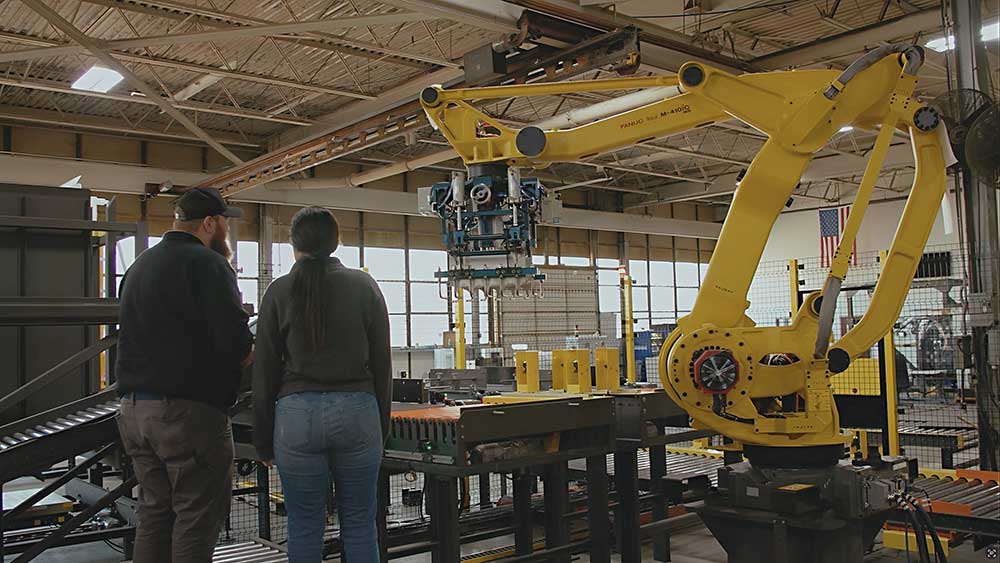
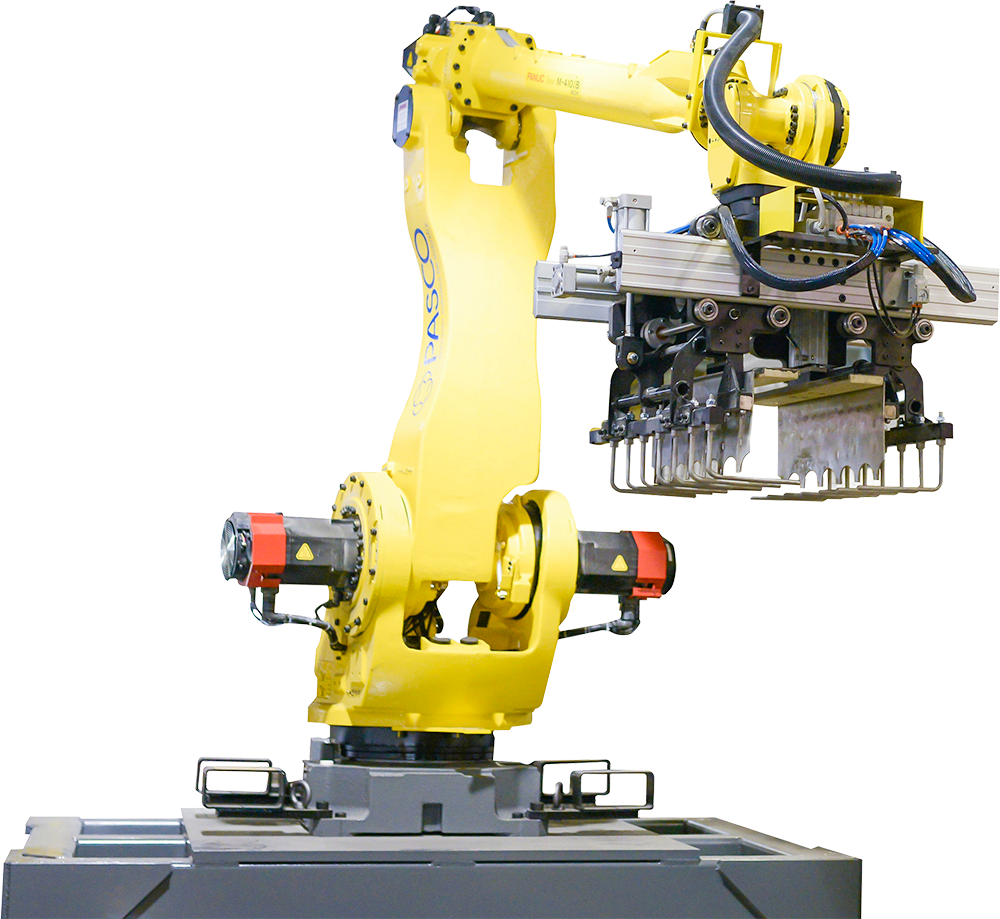
As robotics became more common in the early 2000s, the value equation began to move. Robots brought repeatability and cycle speed that were difficult to match manually. Once that capability proved itself in production, expectations followed.
Removing labor was still important, but customers started asking a different question. Instead of only asking how many people could be reassigned, they wanted to know how fast the line could actually run.
Over time, that became the new baseline.
From Labor Reduction to Throughput
Today, most end-of-line projects are driven by production flow. The system has to keep up with everything upstream without becoming a choke point. If the palletizer or packaging cell cannot match line speed, the rest of the investment upstream starts to lose value.
This has changed how systems are designed. Cycle time, product flow, and recovery from minor stops carry more weight than they once did. Uptime expectations are also higher because many facilities are running longer hours with fewer people watching the line.
Labor savings still matter, but they no longer are the only measure of success.
What Customers Expect Now
Modern end-of-line systems are expected to do more than automate a single task. They need to maintain steady throughput, handle product variation, recover cleanly from interruptions, and integrate smoothly with upstream equipment.
Those expectations have developed gradually over the past five decades. Facilities are pushing harder for output, and the end of the line has to keep pace.
Fifty Years of Perspective
Whether you’ve known PASCO for years or you’re just meeting us, the benefit of a 50-year track record is simple: we’ve seen what works in real facilities, not just in demos. The technology has changed, but the pressure on the end of the line has only increased.